A Christmas Day Sermon (Matthew 2: 13-15)

The journalist Andy Rooney once wrote that “One of the most glorious messes in the world is the mess created in the living room on Christmas.” 

If you and I have left those very messes in order to be here this morning, well, think of the glory that awaits us upon our return! 

Rooney is right, of course. 

When you consider the overabundance of joy that comes into our homes and our lives on Christmas, a little chaos is a small price to pay.  

Where your family may be different than mine is that in my family, Christmas is a day not only for opening new presents, but also for remembering previous ones.  

The opening of presents seems to take us back to other years and other living rooms, with other family, some of whom are gone now or moved away. 

But I don’t want to misrepresent the spirit of our remembering.  

We Grants are not particularly sentimental folk. 

So what you need to understand is that at Christmas, the tales we love most to tell are the ones that recall the Great Duds of Christmas Past.  

There was year my mother got my grandmother, her mother-in-law, a strand of pearls for Christmas…and my grandmother got her a stuffed cat.  

There was the year when my mom got a salad shooter for the second Christmas in a row from the same person, although at least it came in a box the second time around.  (I had insisted on that box.) 

There was the year my grandmother got everyone nutcrackers, each one themed to our hobby at that time—my father’s was an admiral nutcracker.  I got a golf nutcracker.  

This was just your average misfire until my uncle got to his, which was not a carpenter nutcracker in line with his hobby, but was, perplexingly, a shoemakernutcracker, which had nothing to do with anything.  

There is disagreement in our family about what happened next.  

We’re divided about whether he actually put it in the fire that day.  

If you’re interested, the actual disagreement centers on whether our family still used the fireplace at that point, but not whether my uncle was the kind of person who would throw his Christmas present into one.  

Getting into the spirit of the Great Duds of Christmas, one of my daughters never fails to recall the year that we did not achieve “even-steven” on their presents, and she had to sit there watching as the other one worked through one backlog and then another and then another.  Or so she says.  

Of course, there are also the moments when we have managed to get it right.  

Everyone has those, although they may not be quite so fun to tell.  

But you’ll remember those moments when, there amid the glorious mess of the living room, someone receives a gift that is truly wonderful.  

For just a moment, a hush seems to fall over everyone as the recipient takes it in.

I love that hush.  

It’s a respectful silence unlike any other because it recognizes, not that someone has gotten something that they really really wanted, but a much deeper gift: it’s what it’s like to witness a moment when someone feels they have truly been seen.  

We go quiet in the presence of a much holier kind of joy.  

Such moments remind us that, while we may be quick to console one another for a dud gift by saying “well, it’s really the thought that counts,” there are gifts that really do count—moments that take account of us in a particularly powerful way. 

There’s a moment in C.S. Lewis’ novel, The Lion, The Witch, and the Wardrobethat seems to point to this kind of joy. 

You may not particularly remember that when we first see Narnia, the land on the other side of the wardrobe, it is under a witch’s spell. 

The spell is keeping the land in a perpetual, joyless winter which Christmas cannot break through.  

Do you remember the grim joke during the first months of COVID that today’s date was the 97th of March, or what have you? 

That’s more or less what Lewis is imagining as the spell of a perpetual winter.  

But slowly, the witch’s powers begin to weaken, until one day, the characters at the heart of the story hear sleigh bells in the distance—and it turns out that, at last, and for the first time in ages, Father Christmas has been able to come in.  

The moment is described as having a certain surprise.   

“Some of the pictures of Father Christmas in our world make him look only funny and jolly,” the story says. “But now that the children actually stood looking at him they didn’t find it quite like that.  He was so big, and so glad, and so real, that they all became quite still.  They felt very glad, but also solemn…Lucy [she’s one of the children] felt running through her that deep shiver of gladness which you only get if you are being solemn and still.”  

This reminds us of what we sometimes see reflected in the giving of very special gifts: a particular love that shines through the stillness of such moments. 

There’s a lesson in that, too. 

As an anchor point for faithful people, Christmas is trying to talk about God’s love, which arrives for us “so big, and so glad, and so real” that it first evokes that same stillness, and then a “deep shiver of gladness.” 

To look around us, it may not seem that still. 

We celebrate Christmas with tremendous gusto, whether that’s in the form of the glorious mess in the living room, the recitation of the Great Duds of Christmases Past, the biggest tree that could possibly fit in our house, or the loudest sweater we can possibly find to wear for the office party. 

(Someday, I should try to do a sermon about the theology of ugly sweaters.  Come back next year, everybody!) 

Some of you may even have taken part in an informal “Whammageddon!” contest.  

If you don’t know what that is, it’s about trying to avoid the insipid 80s pop song, “Last Christmas,” by the superstar duo, Wham!, whom some of us remember well.  

Anyway, in “Whammageddon,” the last one standing (the last one not hearing the song) is the one who “wins.” 

It’s the “-aggedon” part that interests me – as in Armageddon, from the Book of Revelation. 

It suggests that the Christmas season is an epic battle…a battle that we can only win through some kind of avoidance.  

Certainly, it reminds us of how hard it can be to unplug ourselves from the world’s chatter, even when we really try.  

I’m actually not that gloomy about it. 

I think the real joy, and the real point, is in losing the game. 

Its underlying message is that, like that particular song, Christmas works unrelentingly to find us. 

Whenever and however we manage to get captured are things to be celebrated, and recognized as sources of laughter and community, those two great heralds of God’s kingdom.

God bless the gusto of Christmas – the glorious mess of it.  Even the duds.  

But bless also the stillness of its arrival in our hearts. 

It comes to remind us of how profoundly we’ve been seen, how intimately we are known, and how tenderly we are cared for, not only by those dearest to us, but even more fully by God.

It always takes our breath away and fills our hearts with love. 

Amen.  

Christmas Eve Sermon: “A Christmas Cactus” (Luke 2: 1-19)

A lot of people come to church on Christmas Eve only because somebody else makes them. 

So if that’s you, and you’re here because somebody else insisted, welcome! 

And if you’re here because you’re the somebody who did the insisting, thumbs up.  

(I’m on your side.)

Among the prayers tonight for peace on earth and good will toward all, I’ll add my own prayer that you and I will end up vindicated for getting people here. 

Whether or not you choose to bring it up again later is up to you.  

For its part, the Christmas story doesn’t succumb to any gloating.  

In fact, just the opposite is true.  

It’s a story that is powerfully shaped by God’s capacity for surprise and by humanity’s capacity for wonder.  

Gloating really isn’t a part of it – there was just too much joy in being able to share all these things that God was doing. 

Stars blazing across the sky.  

Angels belting out a heavenly chorus.  

Of course, the arrival of a baby is always a tender reminder of the power of new life and a call to the future, even in hard circumstances.  

But while there is no reported gloating, in its own way, the story does have its own version of “I told you so.” 

Because for all the wonders of that first Christmas Eve, the fact was that much of it had long been foretold.  

For centuries, the prophets had described what truly faithful lives were supposed to look like. 

They’d given account of the grand project that it was to join God’s creative work across creation.  

They gave account, too, of the power of the chaos inside us to challenge that work.

They knew about these things because God had told them so.   

Now in the gospels, Luke is the one who tells us about the presence of the shepherds around the manger.

You’ve got to love the shepherds. 

They’re just about the only ones who would have walked into a stable after midnight and considered it an upgrade

Luke doesn’t say if these particular shepherds were uniquely hopeful, or especially qualified to be there.   

He doesn’t introduce any of them by name or report any specific words they might have said. 

Their own paths to get there aren’t his focus. 

But in words that recall what the prophets had foretold, an angel comes out to call them in. 

This isn’t the version of the story with people arriving at the stable with gifts for the newborn king.

For Luke, the central gift the various characters bring with them is more internal—it’s more akin to a capacity for recognition.  

The shepherds would have recognized the warmth and shelter of this place of last resort where Mary has given birth, not its discomforts.  

For their part, Jesus’ parents would have recognized that lowly shepherds could also be ennobled pilgrims, witnesses of a deeply holy joy.  

Luke says that everyone is “amazed” at what the shepherds have to report—they recognize the wonder of it.  

There’s also Mary. 

In the phrasing of one recent translation, Mary “kept all these things safe in her memory, considering in her heart what they might mean.” (Sara Ruden)

I love that her memory is already at work even before her understanding has managed to catch up.   

She’s no stranger to angels, herself, and yet what it all means is still very much sinking in.

And yet, somehow, everyone gathered would have recognized that while any baby is a wonder and a miracle, this baby – or more remarkably still, this baby – came to lead the world out of its violence and captivity and into the arms of God.  

It makes me think of that wonderfully theological lyric in the hymn, “Hark the Herald Angels Sing.” 

“Veiled in flesh the godhead see,” it says.  

Really, though, what Luke wants us to picture is more of an unveiling

That’s what the people gathered around the manger recognized. 

At Christmas, the definitive presence of love and eternity are unveiled for us.   

The definitive guidance we need to overcome whatever separates us from God, one another, and from our true selves has been unveiled for us. 

The stable’s vision of peace, new life, and a holy vulnerability have unveiled God’s fondest hopes for all people.  

That’s what the story is most eager to say.  

The psychiatrist Erich Fromm once observed that “Hope is not a prediction of the future.  It is the vision of the present in a state of pregnancy.” 

Hope is about recognition.  Anticipation. A sense of the proximity of what is soon to come.  

Isn’t that just what we mean when we talk about incarnation: God coming to join us, taking on the life we know? 

Because if God is close at hand, then everything poised to blossom under His presence is never far away.  

I think that’s why we hold onto this story.  It’s why we keep keeping Christmas. 

Christmas makes those promises easier to remember. 

It’s the time when so much around us seems to blossom, including us.  

This week, I read about a family that has managed to keep its Christmas cactus going for no fewer than 145 years

That’s not so easy, particularly with a Christmas cactus, which people tell me is a kind of plant that apparently gets mad at you for moving it. 

(Any gardeners here? Have you heard of this?)

Apparently, some Christmas cacti can be so sensitive that if you move them even just the littlest bit, they will refuse to flower for a year or two.  

Yet with understanding and a little tenderness, at Christmas, this cactus will blossom.  

The same goes for the picky, prickly cacti known as you and me. 

Whatever we may be like for so much of the year, no matter how sensitive or stoic we may style ourselves to be, Christmas calls forth some of the beauty within us. 

It brings out something that we might otherwise keep hidden or, God forbid, come to forget. 

It reminds us how we might still be shaped by God’s capacity for surprise and by our own capacity for wonder.  

It still has the power to call us in.  

May all creation repeat the sounding joy.  

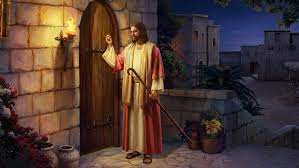
A Sermon for Christmas Eve Day: “Behold, I stand at the door and knock”

“Behold, I stand at the door and knock,” says our gospel this morning. 

The fundamental hope of our faith is that, in Jesus, a different kind of life is possible.  

Where you’re counting on seeing that different life with your own eyes may vary. 

For some of us, the change we’re focusing on is a change for the whole world. Or maybe it’s a change for someone who important to you, or – big breath – change for yourself. 

Isn’t it surprising how the more local it is, the bigger climbing that mountain can start to feel?  

It’s odd that saving the world can seem to offer a way to avoid working on ourselves, isn’t it? 

Not that it’s always that.  

In any case, whatever in our purview stands in particular need of saving, the hope that looks to Jesus is a hope that he will open up something new – that, with God, change will come at last…because that’s who God is. 

That’s what God makes possible.  

As you know, in Scripture, the Book of Revelation comes at the very end.  

Yet the gospel accounts of the first Christmas are offered as revelations every bit as dramatic as anything imagined to come at the end.  

What those accounts want us to understand is focused on that hope—once again, that with God, change will come at last…because that’s who God is.  

“Behold, I stand at the door and knock,” Jesus says. 

“Boy, I sure hope so,” is so often our reply.  

II.

For a while on t.v. there was a cooking show – I don’t remember its name – but the premise was that a celebrity chef and his sidekick zany presenter Brit guy would wander in a random neighborhood somewhere in America, right around five p.m., and start ringing doorbells to see who might be home.  

And if you answered the door, they’d offer to come in and cook dinner for your family, with one condition.  Well, two. 

They got to film the whole thing.  

More importantly, though, they would only use the food you already had.  

In the fridge: the eggs.  The mayo. The celery.  The bologna and the yellow mustard for school lunches.   

Whatever the glop was in the Tupperware all the way in the back.  

The cooking involved a lot more sniffing than you see on Emeril, I’ll tell you that. 

Fearlessly, they’d scrape the olives off a random slice of pizza, repurpose half a jar of salsa, turn the half and half into artisanal butter if need be. 

They’d throw in the Bailey’s Irish Cream from last year’s Christmas party. 

Any spices in the spice drawer, be they limited to nutmeg or Mrs. Dash.  

Whatever you had, they’d try to get it in there.  

Each dish was something hitherto unimaginable, quite possibly unrepeatable, and (almost always) wonderful.  

And so, in some random place, at some random door, on a random night that seemed petty much like yesterday warmed over, the unexpected would happen—the doorbell would ring, and shortly thereafter, there would be a feast.  

III.

To hear Luke tell it, the first Christmas was a little like that – full of surprises and new possibilities. 

Breaking into lives that seem destined to offer little more than yesterday warmed over, the unexpected happens. 

God’s son comes to offer something very different: a new way of living, and ultimately, a new world. 

Time and time again, the gospels go on to show us that Jesus takes whomever he can gather and invites them (…us…) to a feast. 

To some extent, the improbability of who’s invited and what gets served is offered as part of the delight.  

But from the very beginning, from the manger itself, Jesus’ kind of party was always one where unexpected things went together and turned out to bring out the best in each other.  

All these years later, that’s still his kind of party. 

IV.

Truth be told, this can ask a lot of us.

We may not always acknowledge the courage such moments require, although Luke the gospel writer keeps pointing that out all along the way.  

Surely, it’s not for nothing that when the shepherds out there in the fields, watching their flocks by night, the angel’s first words to them are: “Fear not.” 

Way before that, the story offers us a catalogue of things rightly to be feared: everything from personal embarrassment and likely social stigma for Mary and Joseph, to the threat of political power at its most lethal (as we see in Herod and soon enough again with the Romans). 

There is the somewhat more predictable, but very real danger of childbirth itself – that’s Mary again, of course. 

Soon after their encounter with the angel, the shepherds will have to overcome the danger of straying a little too far away from the safety of their group as they venture into town—a place where they would have been seen as a nuisance, at best. 

For each of the figures whom we find around the manger, that gathering comes at a moment when attention is something they’ve been hoping to avoid, for any number of good reasons. 

For people trying to fly below the radar, the darkness offers a certain amount of cover.  

The point, though, is that they step out of that darkness and step into the infinite possibility of love to remake our lives and to remake the world.  

That infinite possibility is the essence of Christmas.  

It says that each of us already has so much to offer.  

The ingredients are already there. 

Each of us is poised to offer something hitherto unimaginable, quite possibly unrepeatable, and (almost always) wonderful – provided love is there to bring it out…

…provided we are there, joining with God to nurture that love, (and) to bring out the best in one another and in our world. 

Admittedly, it takes some courage to open the door when God rings the doorbell. 

But the darkness cannot save us, friends.  

In the end, only the light can do that.  

Only opening our hearts can do that. 

Only God can do that.

Whenever we gather, we remember with joy and gratitude that God already has.   

Amen.

Sermon: “Long-tempered” (2 Peter 3: 8-15a)

In our Scripture this morning, we hear this counsel: 

“The Lord is not slow about his promise, as some think of slowness, but is patient with you, not wanting any to perish, but all to come to repentance.” (2 Peter 3:9)

This week, I learned that Biblical Greek has at least two words for patience, the pronunciation of which I will now proceed to butcher for us all. 

The first of them is hupomeno, which means, literally, “to tarry behind,” and more generally, “to endure, or to bear bravely and calmly.” 

It’s the word for the kind of endurance we draw upon in difficult situations or, say, when we encounter a challenge in the world of things. 

So, for example…and I’m just, well, completely making something up on this…say you’re searching online; you find someone the perfect Christmas gift at the right price and there’s a little countdown clock saying that if you order in the next two minutes you’ll get your delivery just in the nick of time; you hit click to buy it.  

And it’s ONLY THEN, that Land’s End – er, sorry…wherever it is you’re ordering from…says that the item won’t be available in that size until Groundhog Day.  

According to the Bible, in such a moment, the best of us will draw on their capacity for hupomeno: the capacity to bear bravely and calmly. 

The second word the Bible offers us is makrothymia – which means, literally, “long-tempered,” (as opposed to “short-tempered”).  

This is the version of patience being described in this morning’s reading, when it says: “The Lord is not slow about his promise, as some think of slowness, but is patient with you, not wanting any to perish…” 

It is the word we use for patience with other people.  

And what I appreciate about that is its recognition that other people require a different sort of patience from us.  

The great Existentialist Jean-Paul Sartre wasn’t sure anyone was really up to it.  

“Hell is other people,” he famously wrote, suggesting that our temper toward one another didn’t much matter in the end – that we’re just sort of stuck with one another.  

Scripture is more hopeful, although it emphasizes that the equation can’t work without God.  

On some level, that may seem sort of obvious, at least if you count yourself a believer. 

How can anyone make a go of loving without access to the source of Love Itself?  

Fair enough, and yet Scripture’s point about patience this morning is a slightly different point.  

Because it’s not saying that our patience is the same as God’s—a chip off the old block, as it were.  

It’s reminding us that God is patient with everyone, us included, and that this ought to inspire both some genuine humility in us, as well as more genuine patience with others.  

It’s good advice.  

I remember years ago walking past a coffee shop in New York City – the kind that has a chalkboard outside where someone with amazing handwriting (where do they get all the baristas with amazing handwriting?) had written: “Life is hard.  Remember that ABSOLUTELY EVERYONE is having a hard time.” 

I also remember thinking to myself as I walked by that categorical statements are never, ever true.  

Since then, though, life seems to have taught me otherwise.  

I have known people in all kinds of circumstances, positive and negative, and I have been tremendously blessed myself. 

Sometimes, I have to push myself a bit to count my blessings—or to get more specific than my family, my health, a roof over my head, and our church, but when I do, it doesn’t take me very long to get on a roll. 

I still wouldn’t say that life is easy.  

And after some years being alongside people in all kinds of moments in their lives, wonderful and challenging, heart-filling and heart-breaking, for me, the words on that sign outside the coffee shop ring true. 

Everyone is having a hard time.  

I’d also say that the words of the Bible ring true. 

Life is full of challenges, but people represent a different kind of challenge and require a different kind of patience.  

Spouses know this.  

As someone once said: “A successful marriage requires falling in love many times—always with the same person.” (Mignon McLaughlin)

It challenges us to become long-tempered with one another, remembering, for starters, that we may not be the easiest person to be married to.  

I am an only child, so I can’t tell you if siblings know about that different kind of patience.  

I will say that, having shared so much history, siblings seem to speak a common language – something that is not only of words, but facial expressions, hesitations and silences, old pictures, old scores and previous reconciliations for good or for ill, and so on, all of which seems to teach them how to be one of two things: it teaches them to be either remarkably long-tempered with one another, or impossibly short-tempered with one another, and to go from one to the other and back again, quite often at the drop of a hat.  

Outside the circle of our families, our interactions are shorter, and the difference between surface politeness and actual patience is harder to spot.  

When I was living in Philadelphia, there was a deli I used to go to – one of those places where the lady behind the register was the master of all she surveyed.  

She sat on a little stool surrounded by candy and boxes of cigarettes, but it might as well have been the Iron Throne from “Game of Thrones.” 

She spoke a language I don’t know, so I can’t say what she said, but I can tell you that she screamed it—whether it was at the guy who was working the deli counter, or the kid restocking the Snapple, or on the phone to whomever.  

It was the sort of situation where you’d be standing there uncomfortably with your tuna fish sandwich waiting to pay, not sure if you were supposed to be hearing whatever it was she was saying.  

And she’d wave you over impatiently in mid-rant, ring you up, shouting the whole time, and then she’d look you right in the eye, smile, and coo “Thank yoooooo,” before jumping back into whatever it was.  

It was a situation that left me with so many questions.  

Was the politeness just a put-on…or, in fact, was she secretly just screaming for the show of it, sort of like a drill-sergeant trying to get things done? 

I never knew.  

But I would offer that many of our interactions with others may leave them wondering how sincere we really are.  

To cultivate long-temperedness with our neighbors that they can know and rely on asks more of us than we may quite realize. 

Yet it helps to remember that God’s patience with us is of the kind which sees us as people to be known, even with all our flubs, flaws, and foibles, and not that other kind of patience we find in the Bible, which would treat us as a situation or a thing to be put up with.  

It reminds us also that, as people encounter us, they are not and cannot be entirely sure how we see them—if beneath our surface politeness, we see them as a thing to be endured…handled…managed, or as a person deserving a different kind of patience: our best shot at genuine long-temperedness.  

At Christmas, we celebrate the arrival of Jesus, who comes not to somehow manage our sins, but to love us into what we might become.  

May the season inspire us to seek such patience in ourselves, and lead us to find such love.  

Amen.

Sermon: “Going Through the Motions” (Luke 1:5-25; 57-65)

Those of you who travel frequently for business tell me that it isn’t long before any allure that it had initially begins to fade. 

My parents both had to do a fair bit of travel in their careers, and they say that, too. 

I gather there usually isn’t time for much sightseeing when you’re traveling on the company’s dime and time.  

The job is the focus, and the place, wherever it may be, can become sort of a blur.

Wherever you are, it’s always the Hilton.  

Taken to an extreme, there was that movie with George Clooney where he flew all over the country on a business trip that more or less never ended, going from place to place to fire people on behalf of companies who had outsourced that task.  

In many ways, he’s the right man for the job.  We come to understand that he really has no ties to anyone or anywhere—that in lieu of grounding commitments, he prides himself on things like being a savvy traveler who travels light (which is, of course, a metaphor) and an accruer of airline miles—and this is more or less what gets him through the day.  

Until of course, it doesn’t.  But that’s another story.  

Yet we sympathize, because as so many of us know first-hand, in such a job, the airports are all alike, the hotel restaurants and rooms are all alike, the professional interactions are all alike, and so on.  

What makes him different is that, in his case, this isn’t a kind of price to be paid for the good things in life—it’s all there is. 

So in this morning’s gospel, when Zechariah goes up to Jerusalem for another business trip, which history suggests he would have done twice a year for two weeks at a time, I wonder if he is another one haunted a bit by the sameness of it all.  

I wonder if he arrives for duty without much expectation, prepared just to go through the motions once again.   

He is different and infinitely richer than George Clooney because he does have a home to go to, and a wife he loves who’s waiting for him there – but there’s a sadness to him, too. 

He has no son to bring along and introduce around, no pictures to share on his iPhone with the other guys in his cohort. 

To some, that may sound awfully shallow, and it’s true that the Bible has a strong bias in favor of families that we may not share.  

But alongside that bias, the Bible uses the image of children as a way to talk about the future – and to emphasize, in particular, that what will be soon is significantly connected to what is now

In fact, the Bible is a lot less interested in any vague notion of “someday” than we may realize.  

Its focus is on getting us to respond to God’s invitation to build what is to come.  

So Zechariah comes dutifully to offer his service to the Temple once again, arriving to perform faithfully the rituals of his people’s faithfulness, and all the while, nobody seems to notice that this asks an even further kind of faithfulness of him, as he works on behalf of promises that, for himself, he’s long since given up on.  

He’s like a crewman on the Titanic, with the world a kind of doomed vessel, and him quietly and efficiently assisting everybody else into lifeboats where nobody will be holding a place for him.  

And yet somebody has to help the others.  

If you think about it, it’s kind of a weird way to begin getting us ready for Christmas. 

In point of fact, the creators of our cycle of readings, the Revised Common Lectionary, don’t assign the story at all, whether at this time or at any other, so those who engage the Bible primarily through Sunday worship will not know the story well, if at all.  

Somewhere along the line, somebody decided that we can get to Christmas without it. 

With all the usual stuff to talk about, that may well be true.  

Plus also, the way we’ve read it this morning didn’t get into the connection between John’s mother, Elizabeth, and her younger cousin, Mary, who will become pregnant just a few months later.  

Their pregnancies are intertwined, just as the ministries of John the Baptist and Jesus will be intertwined.  

But I’m going to argue there’s a reasonable logic to beginning the season by acknowledging emptiness.  By naming the challenge of going through the motions.  By saying some journeys don’t seem likely to lead us home.  

Even Hermey the elf would tell you that Christmas itself can be like that.  

Yet the story of Zechariah and Elizabeth is the story of how Christmas begins way before that star came to rest over the manger in Bethlehem. 

It begins way before the magi first noticed it in the skies and traveled across the ancient world to see it up close.  

It begins way before Mary and Joseph.  

It begins even before John the Baptist.

Maybe we can’t even quite say when it begins—John’s Gospel will suggest that from the beginning, Christmas kind of always was. 

But Luke says that Christmas begins with this old couple, Zechariah and Elizabeth, and in how the angel makes it clear that with God, all things are possible.  

It begins when he is selected, seemingly by a roll of the dice, to be the one who goes deep inside the Temple to light the incense near the holy of holies—a seemingly random opportunity to go far into restricted territory.  

The restrictions were real. 

The only one who got much closer to God’s particular point of contact in and with Creation was the High Priest himself, and that only on one day a year.  

But Zechariah is chosen—and so, when an angel is there to greet him and share with him the wonderful news of his own child yet to come—a second and more importance instance of being chosen—we can understand why he would be frozen for a moment in disbelief. 

Struck dumb.  

It’s such an important moment, I think, because it names how so much of what God does, even a flat-out blessing, can be so hard to get your head around.  

But it reminds us of something profoundly important about Christmas, namely, that even in our disbelief, even in our exhaustion, even in our disappointment and our skepticism and our loneliness…even in the brokenness of so much of the world around us, even as we are just going through the motions…with God, all things are possible.

The Christmas hymn “O Holy Night” describes it in words that Zechariah would well have understood. 

Long lay the world in sin and error pining
‘Til He appears and the soul felt its worth
A thrill of hope the weary world rejoices
For yonder breaks a new and glorious morn
Fall on your knees; O hear the Angel voices!

These words would have pointed to so many hopes and to the lifting of so much weariness. 

They still do.  

They tell us that more is going on than we realize – and more is yet to come. 

A hopeful future and a redeemed present are utterly intertwined and closer at hand than we know.  

And if that seems impossible to believe from where we’re standing, Luke is here to tell us that these things have been in motion far afield from where we are, but into which the love and purposes of God are already beginning to sweep us.  

Like Zechariah, we will find that God is already well at work, and in that working, sadness will be transformed into joy, fatigue will be transformed into new life, and we go from numb to dumb to bursting into song. 

Amen.  

Sermon: Thanks-doing (Luke 17:11-19)

In our house, the season of Christmas movies has already begun. 

We watch a lot of the classics and a fair number of not-so-classics, which we also love.  

But I am very much a lover of Thanksgiving, and so part of why we start so early with Christmas is simply that there really aren’t any Thanksgiving movies we can watch instead. 

Certainly, there are none that feel like required holiday viewing, right? 

“Miracle on 34th Street” begins with Thanksgiving, but as soon as Natalie Wood gets her mother to invite the guy across the hall for dinner, it’s done.  

There’s the Charlie Brown Thanksgiving special, which is pretty good.  I like that one, especially its culminating friendsgiving, but that’s pretty much it.  

And then there’s the Steve Martin/John Candy movie, “Planes, Trains, and Automobiles,” which is about two strangers who get thrown together, trying to get home to Chicago for Thanksgiving after a series of epic misadventures. 

In that movie, the real kicker comes at the end. 

The two men are profoundly different.  Steve Martin is intense and inclined to complain; John Candy is more happy-go-lucky but also a bumbler.  

Their bickering and bad luck are the backbone of the movie. 

Finally though, they get where they’re going, and they shake hands with a kind of well-meaning finality. 

Steve Martin gets on the train to go the last few miles toward home.   

But as he’s looking out the window, as the city goes by and he’s heading out to the burbs, he begins thinking through the whole journey in his mind…and it’s then he suddenly puts it together. 

He realizes by remembering some strategic silences and some body language he hadn’t picked up on that, in fact, his traveling companion doesn’t have a place to go…that his family or his friends aren’t waiting for him…that all along, his warmth and happy-go-lucky way were masking a much more complicated and painful story.  

Martin turns around. 

He goes back to the station where he’d just left his fellow traveler.  

Sure enough, Candy is sitting there alone in an empty station, sadly staring off into space. 

The situation is just as Martin had suddenly realized. 

And so, of course, in the last two minutes of the movie, with all their bickering forgiven, Martin invites him to come join his own family for Thanksgiving.  

It’s lovely.  

Except maybe we shouldn’t be quite so quick to say “of course.” 

Or maybe it’s fair to say that if he puts the truth together in time, and if he decides to backtrack toward his original station, and if it turns out that his traveling companion is still there – if all the “ifs” line up like that – well, in that case, then “of course,” he will invite his friend to Thanksgiving dinner. 

Which he does. 

Do you ever have moments where you think to yourself, “You know, I should really…” do…(I don’t know what)? 

“I should really call them.”   

“I should really send them a note.” 

“I should really stop by and say hello.” 

Don’t get me wrong, there are a lot of things that any of us should really do—organize the basement or check it for radon, stock up on that icy-melt stuff for the front walk, or what have you.  

Today, I’m talking more about those things we should really do when it comes to other people.  

So often, those realizations bubble up for just a moment and then pop. 

Something else we really should do, in fact, something we should really do first, enters into your mind, and that’s that: the moment passes to make that call or show up with that plate of brownies.  

If you think about it, it’s not so obvious how all our “ifs” line up, and what needs to happen to get us to “of course.” 

To put it another way, there are moments of realization – the moment when we put two and two together.  

But beyond that, there are moments when we put two and two and two together, and we actually make the effort to turn back – to make good on our passing realizations and turn them into something more durable. 

II.

This morning’s Gospel describes a moment like that – a  moment when someone manages to put two and two and two together.  

The place where it is thought to have happened is now known as Burqu’in, about a mile and a half from the city of Jenin, on the West Bank and now part of the Palestinian Authority. 

The current church rests on a cave, which was the original church and is both one of the oldest churches in the Holy Land and also remembered as the place where the ten lepers were quarantined…According to local telling, it was their cries from the cave that drew Jesus closer, and you can still see the hole in the roof of the cave where it is claimed people would drop alms or maybe food and water.  

The cave doesn’t figure in the story as Luke tells it.

But you can imagine the isolation and sadness of such a place, which point to the isolation and sadness of their lives in general. 

Imagine how they must have spoken of home if they allowed themselves to speak about it at all.  

Luke says that Jesus calls to them – and maybe he stands right above that hole in the cave and calls right down, and the cave where they’re sitting is suddenly echoing with the voice of God, like the tomb of Lazarus, telling them to come out.  

They don’t need to be told twice.  

They don’t wait.  They don’t ask questions.  They don’t stand around for a quick selfie.  

Like most of us probably would be, they’re off like people running to catch their flight, hoping they can make it home before the family cuts the turkey.  

They look down, and for the first time in ages, they’re clean.  Free of their disease.  Free to return to the land of the living.  

Free.

Except that one of them seems to put two and two and two together, and unlike the others, he does this powerful thing.  

Like Steve Martin in “Planes, Trains, and Automobiles,” he has a revelation, and he turns right back around.  

You’ve got to figure that he’s as eager to get back home as any of them. 

But he recognizes that the moment is inviting him to respond, to offer something in return – to do something more durable.  

And he comes back and kneels at the feet of Love Itself…Love Incarnate…The Word Made Flesh…to say thank you.

It’s a gesture that signifies not only that he has been made clean, but something even deeper—that he has been made well

III.

I think it’s a misreading to suggest that the other nine were somehow not thankful for what had happened. 

I’m sure they were.  

I’m sure that back home, somewhere after their third plateful of Thanksgiving everything, with their families sitting at the table speechless and their whole villages all standing outside in the yard, it occurred to them: they should have taken a moment back at the cave to say thanks. 

I’m sure that for many of the nine, there wasn’t one single night they went to bed without remembering and giving thanks for Jesus.     

So when sermons on this story underline the whole idea of cultivating an “attitude of gratitude,” as if it’s just the one who turns back who feels grateful, I think they’re missing something very important. 

The point is that, in our gratitude, we are invited to respond.  

Because yes, it’s great to be grateful.  

But now that they’re back, what happens?  

The next time a leper, or some other outcast, finds their way to the edge of the village, what will they do? 

It’s interesting to imagine them passing by a quarantine cave in their own neighborhoods, a place they’d grown up with and maybe never thought much about before their own affliction.  

But now they know the darkness of such a place. 

Now they’re fluent in the cries that come out of it.    

It may not be them or their child who’s in there now, but each person in that cave is someone’s child.  

Each person in that cave is one of God’s children.  

They should know.  They should remember.  

So having been made clean, themselves, how will they respond?

That’s the question. 

This isn’t a story about simply remembering to feel the right feelings.  

It’s a story about turning around – because the gestures we make…the steps we take…are what show what is well with our souls.  

IV.

Personally, I wish there were more Thanksgiving movies. 

More stories about unexpected guests and accidental friendships. 

More stories about moments of realization that, because of God, we belong to one another and are charged with being each other’s keeper. 

More stories of making room at the table and turning around to seek one another.  

May our thanking always take the form of giving, and our hearts continue to be shaped by gratitude.  

Amen.  

Sermon: The Weight of “What if?” (Matthew 25: 14-30)

Jesus begins this morning’s parable by saying, “For it is as if a man, going on a journey, summoned his servants and entrusted his property to them.” 

Of course, even if his disciples don’t know it, we know that his words point straight back at himself, as he prepares to leave them and must entrust his work – the proclamation of the coming kingdom of God – to their care.   

What they are poised to do with it is very much on his mind, and it seems as if what he wants is to see that it is on their minds, too.  

It reminds me a bit of that book you used to see right by the cash register at places like Barnes and Noble – I think it was called something like “The Worst Case Scenario Survival Handbook.” 

It was supposed to be a joke, of course, but there it was, a little handy dandy guide with quick tips on things like how to escape from quicksand, or wrestle an alligator, or survive jumping out of a plane without a parachute.  

There was one part I read that I still have nightmares about, which is what to do if you wake up and you’re in a coffin and they’ve already buried you six feet deep.  

I never did buy the book, and as I said, it didn’t style itself as an actual emergency manual for anyone.  

I would hate to imagine that there were people who sincerely relied on it, even refused to leave home without it…just in case.  

But in all seriousness, it did get you to look at the world a little differently…  

…To ask yourself, “what if?” 

“What if it something unthinkable happened, and thinking about how making it through was all up to me?”

In some sense, this is what’s lurking just below the surface as Jesus shares this parable—his knowledge that something unthinkable was about to happen. 

However, what “survival” would look like was an open question.  

II.

The parable talks about being entrusted with the master’s property – in some versions, all that he had.  

It also helps to recall that a “talent” of silver was an astronomical sum: perhaps as much as twenty years’ wages for a typical day laborer. 

I remember writing a check for Liz’s engagement ring. 

The amount was, I admit, somewhat shy of twenty years’ wages, but it was still the largest single check I had ever written up to that point—it felt like an astronomical sum, at least for me. 

So imagine being called into the head office, up there on the campus of the old American Can Company off King Street, the holy of holies in one of those enormous office parks from fifty years ago, and there on the chairman’s desk are a hundred years’ wages…or forty years’ wages…or just twenty.  

The chairman stands up and says, “I’m going away. I need you to look after this for me until I get back.” 

No explanations.  No further instructions or suggestions or anything. Not even a thumbs up.  The meeting is over. 

Two guys in jump suits step forward with a hand-truck to wheel those talents of silver out to your car.  

And seven minutes later, you’re driving down King Street, heading home, your car sagging just a few inches above the road, while you’re trying to get your head around what just happened and what in heaven’s name is going to happen now.  

Because it’s then that the full weight of this responsibility starts to become clear.   

It’s a scenario that nobody’s quite prepared you for.  

It seems outlandish.  It’s supposed to be. 

Yet if we compared notes, I’m sure it would not take us long to recognize that even in the normal course of our lives, there are any number of tasks we take on that nobody has quite prepared us for…or ever quite could. 

In the world of ministry, for example, I remember how challenging seminary was and how proud I was to have made it through – and I remember the day when I realized that what it taught me was only just enough for me to get started. 

It’s the difference between sitting in a locker room while a coach stands at a blackboard with a piece of chalk, making a picture of all these x’s and o’s and arrows and stuff…and then finding yourself out on the twenty yard line. (The analogy, in an entirely different context, is from JKA Smith.)

There are plenty of experiences in our lives that are like that.  

Work is like that.  Parenthood is like that.  Marriages are like that.  Serving our community is like that.  

There’s no shame in not knowing what to do. 

But recognizing the responsibility that’s fallen to you means that it’s on you to figure it out.  

III.

And this is Jesus’ point in the parable.  

The first servant goes home with 100 years of wages – more money than he, his son, and maybe even his grandson would be likely to acquire over three generations without a single day off. 

He figures it out.  

The second servant goes home with 40 years of wages, which is every nickel you would have earned since James Watt was Secretary of the Interior.  

He figures it out.  

But the third servant doesn’t figure it out. 

Or maybe it’s more accurate to say that what enters into his figuring is a rejection of the responsibility that’s been placed on him.  

The First Nations Version, a translation of the Gospel by and for Native Americans, substitutes herds of horses instead of talents of silver. 

It reads: “The man with five herds of horses went to work right away, traded well, and earned five more herds.  In same way the one with two hers used them to gain two more.  But the one who had only one kept the herd well-hidden and safe from thieves.” (FNV 25: 16-18)

Strictly speaking, it’s not nothing

It’s also far too short of something.  

Because it isn’t enough to be a security guard.  He’s called to be a caregiver.  A cultivator.  

The results actually matter.  

We’ve talked about the sheer weight of what he has been handed. 

And yes, it’s a lot.  Fair enough.  

The point is that he never even tries to bear that weight.  

He doesn’t hold himself responsible, much less live up to the trust that the master has placed in him.  

This means that, when the master finally returns to settle accounts, the third servant has nothing to show for it.  

IV.

The master’s ensuing judgment and rejection are painful to read.  

We are so accustomed to the mercy of God, the patience of God, and the balm of forgiveness that we may find it hard to have our Jesus speak in such a way.  

But the results actually matter to God.  

What we do actually matters

Maybe we just have one person we’re asked to care for – or two or five…one phone call, email or text we should send…or two or five. 

Maybe there’s just one community meeting where our voice would make a difference.  Or two.  Or five. 

Maybe we can make time to pray or to listen to our conscience just once this week.  Or twice. Or…well, I’m sure you get it.  

Jesus isn’t asking us to be super-human.  He’s just asking us to be Christian.  To be responsible enough to show up and to be faithful in following as things go where they go…as needs evolve and relationships unfold.  

If you think about it, the truly scandalous thing about our faith is not how much is required of us, but really how little. 

But Jesus pushes us to own our part of the work fully, whatever our part may be, remembering that lives depend on it – including our own. 

V.

I don’t remember how to survive if I fall out of a plane without a parachute. 

I don’t remember how to recognize actual quicksand, much less escape from it.

But with God’s help, I am learning to ask “what if…” 

Not the “what if” of calamity, but the “what if” of possibility.  

The “what if” of hope and new life. 

The “what if” that imagines what would become possible if the churches truly committed to bearing the weight of God’s love for the world. 

What if we lived each day, mindful that showing and sharing that love actually matters?  

What if we already have everything we need to make God’s dreams for us come true?                           AMEN.  

Sermon: Thankfulness, Selfishness, Pumpkin Spice (Deuteronomy 8:7-18)

This week I went for coffee at Starbucks with a clergy colleague. 

They don’t have Coffee For Good at their church in Westport, so…you know, any port in a storm. 

It was super busy when we got there, and truth be told, we got to talking and sort of forgot to get our order for awhile. 

Anyway, suddenly my colleague remembered and hopped up to grab our coffees.  

And apparently, something had gotten lost in translation at some point, because what we received were two pumpkin spice lattes. 

Which was not what we’d ordered.  

I’m not a pumpkin spice guy.  Neither is my colleague.  

But you know: there’s that first sip where you’re like “Wait, what? This is wrong…”, but then it seemed like too much of a hassle to get up and go fix it…and so, with a little bit of eye roll, we both sort of settled into the experience. 

Whatever.

But then, a few minutes later, my colleague was in mid-sentence about something else when he sort of looked down at his cup and he said, “You know….” 

And I was right there with him. 

I looked at my own cup said, “This is kind of good, right?”

Surprise, surprise.   

So…I don’t know how it was that someone decided to liven things up by giving us each a shot of pumpkin spice and some whipped cream, but I’m glad they did.  

Now admittedly, it’s probably more of a one and done moment for me, but so what? 

We need to take our joys where we find them. 

It also seems to me that these weeks just after Halloween may be a little bit like that too – they’re kind of a shot of pumpkin spice into our lives. 

That shot may not be exactly what we ordered, but so what? 

As we settle into the experience, it might turn out to be just what we wanted all along, though maybe without quite knowing it.  A true joy.  

Because that’s what Thanksgiving as a season ought to be: a source of deep joy.  

Most of us are not close to the season’s agricultural roots at this point.  

In Europe, the tradition of harvest festivals goes back, in some cases, to the time before Christianity arrived. 

Ironically, part of the early logic of Halloween as a church holiday may have been about trying to bring the pagan celebration of nature into a more explicitly Christian framework.  

A thousand years later, some churches started to get uncomfortable with what had come to seem like a pagan celebration of witches, darkness, and mischief, so they began to look at harvest festivals as a more wholesome alternative.  

Go figure.   

But the underlying call to joy and gratitude remain unmistakable and worth holding on to.  

There’s also a power in speaking of abundance in a world that is so carefully organized around keeping us hungry in any number of ways.

So many of the voices we hear seem determined to convince us that what we have is not enough…that what we do is not enough…that who we are is not enough…but not to worry, because when it comes to what we need, they have just the very thing.  

In the face of all that, Thanksgiving tries to offer us a shot of gratitude for what we have. 

It dares to say that, if you think about it, so much is actually pretty good…that if we need to take our joys where we find them, we need to look neither as far nor as widely as some might have us believe. 

II.

This morning’s reading from the Book of Deuteronomy is also grounded in the logic of thanksgiving. 

It is taken from one of Moses’ final speeches before the Hebrew people as they are finally preparing to enter the Promised Land – this place described elsewhere as “flowing with milk and honey,” that is, a place of both sustenance and sweetness – after their long years of wandering in the wilderness.  

Moses also knows that his own journey is also about to end, and that he will not be crossing the river with them. 

He will no longer be there to offer them the definitive guidance or provide the source of connection to God that has shaped the people for a generation, slowly forming them for this long-awaited new chapter.

And so, both because he loves them as he does and also because he knows them as he does, he worries. 

He worries like a parent dropping off a kid at college for first time…and this speech is like a moment in the station wagon when instead of just worrying like most parents do, this parent turns to you and asks, “Are you honestly ready for this freedom?” 

Because it is amazing how quickly a blessing can start to seem ho-hum. 

Moses has already seen that happen with this same people too many times to count. 

Most notably, there was the blessing of manna, which had saved them from starvation in the wilderness – literally, their daily bread falling from heaven, thanks to the provision of God – only to have them start complaining about it.  

Scripture tells us that they kvetched even to the point of remembering fondly how wonderful the food had been back in Egypt, when they were slaves under Pharoah – as if that part was just some minor detail next to all that food, glorious food.  

I mean, you can just see them lining up for the manna. 

“Hey Moses, do these come in whole wheat? Could you at least ask?” 

Remembering that so clearly, Moses is wondering just what is poised to happen now on the other side of freedom, in this place where every dream they’ve ever had or ever could now seems poised to come true.  

And what he warns them about is how quickly they may well forget. 

“Take care those you do not forget the Lord your God,”
 he says. 

“When you have eaten your fill and have built fine houses and live in them…” 

“When your herds and flocks have multiplied, and your silver and gold is multiplied, and all that you have is multiplied…” (v. 11-13). 

How quickly this “good land,” with its flowing streams and lush hills and fertile fields, where they will eat their fill and lack nothing, will no longer seem like the wonder it is. 

What begins as a blessing turns into the new normal, and then in time, starts to seem insufficient, somehow. 

It will no longer feel like it’s “enough,” and what began as liberation will quickly shrivel – and all the more quickly if they seek to respond by pursuing selfishness.

III.

His solution is to remember the giver in order to remember the gift.  

Moses says, “Do not say to yourself, ‘my power and the might of my own hand have gotten me this wealth.’ But remember the Lord your God, for it is he who gives you power to get wealth, so that he may confirm the covenant that he swore to your ancestors, as he is doing today.” (v. 19)

That might seem backwards.  

Shouldn’t it be that keeping sight of the gifts reminds them of the giver? 

Well, maybe it should be that way. 

The problem, as we’ve said, is that it won’t be that way.  

The people will stop noticing.  They will stop remembering. 

What was once a gift beyond all imagining will soon fade into the new normal, and then into the not-nearly-enough.  

Except.  

Except as they learn to look back to God. 

Except as they learn to remember and so come to see the blessings that surround them with fresh eyes.  

Except as they learn to practice thanksgiving and find joy in all that God has done and is doing and will yet do.  

IV.

What does that mean for us? 

I think it calls us to practice thanksgiving, too.  

It tells us that we also need to see the blessings that surround us with fresh eyes, and to push back against the forces that are so keen to distract us from the many forms of abundance that surround and sustain us.  

We need a shot of pumpkin spice in our lives to help us remember—to offer us a clue that points us finally back to God, whom we are called to know as the ultimate giver and source of all true blessings. 

That’s why we need this season.  

May it teach see our hearts made thankful, our thoughts hopeful, and our souls tranquil—just as we wanted all along, if maybe without quite knowing it.  

Amen.

Sermon: Surviving? (Matt. 22:15-22; Exodus 33:12-23)

For the first few seasons, I was a great fan of the t.v. show, “Survivor.” 

You guys know “Survivor,” right? 

A group of people from all different ages and walks of life get plunked down somewhere beautiful but tough to live in, at least at first. 

It’s as if they are the random occupants of a lifeboat that has managed to make it to the relative safety of an uncharted island, and they to find a way to make it work—build shelter, find food, prepare food, eat food…gather wood, etc.    

Ultimately, of course, they must also find a way to survive one another, which is more about group dynamics than physical hardship.  

But the hardship is central to the experience. 

When each season begins, the contestants have only the clothes on their back and, as it happens, one personal item that they are permitted to bring.  

And this morning, it’s actually that personal item that I want to focus on.  

The very first person voted off the show on the very first episode of Season One was Sonya—a kind but rather physically frail person.  She lost the first challenge and the group decided she was only going to be dead weight, and they got rid of her. 

Her personal item, I remember, was a ukulele, which seemed very her.  

The villain of that first season, who also ended up the eventual winner, was Richard.  

His personal item was a little flint and some artificial kindling. 

Smart, right? No wonder that he won.  

He figured out that the guy who could make fire was important to keep around, at least for a while, and that it would give him some important room to maneuver within the group, which was really what the game was about.  

He was the first person in the show to see that a contestant’s personal item was an important kind of currency.   Something to trade on. To bargain with.   

In its way, it also said something about him as a person, of course, just as Sonya’s ukulele surely said something about her. 

But Richard was there to win the game, and who he was as a person didn’t really factor into his calculations. 

Or maybe that tells you everything you need to know about who he was as a person.  

II.

Our Gospel this morning also points out a kind of deeper calculation, as revealed through what someone has in their pockets. 

Matthew describes what may have been a decisive confrontation between Jesus and the Pharisees—a moment shortly before they decide it is too dangerous to let Jesus speak, and probably too dangerous to let him live.  

The key moment is a kind of gotcha, when Jesus tells them, “Render unto Caesar’s what is Caesar’s, and render unto God what is God’s.” 

He’s asked them to pull out a coin and tell everyone whose face is on it. 

So they do that. 

“Caesar’s,” they say, matter-of-factly.  

What you need to know is that at that time, that would have been flashing the enemy’s money. 

For the crowd, having Caesar in your pocket was to announce that, when it came right down to it, Caesar had you in his pocket.  

If the story went on for just another line or two, maybe they would have said that, like it or not, Caesar’s coins gave them room to maneuver.  

But as it happens, it would have said almost everything anyone needed to know about their ultimate loyalties, and about whom they were as people.  

And that is the point that Jesus wants to drive home. 

What are the loyalties that define us?  

Are there things that we are finally unwilling to trade away, or is everything up for negotiation, somehow?  

III.

That’s what Moses is worried about in this morning’s reading from Exodus.  

But first, that needs a little more explanation. 

The moment occurs during the leadership of Moses and comes from the Book of Exodus, sometime after Moses descends from the mountaintop, bearing the Ten Commandments.  

Well, at first, those turn out to be a complete flop. 

The people get scared while Moses is away receiving the Commandments. 

In fact, they get so scared that they turn toward symbols they can see, feel, and touch. 

At first, it seems unnecessary but sort of understandable – a security blanket, of sorts.  

These people bear a lot of scars from their journey up to now, and the man who has seen them through it all has gone off to do who knows what.  

But it all goes south.  

Instead of helping the people reconnect to God at a precarious moment, those symbols seem to replace God. 

And we know that because they seem to unleash a frenzy of behavior that God would never approve.  

They’re living the exact opposite of the kind of life that God would describe in the Ten Commandments.  

The world devolves into a place where all impulse control has gone out the window, and Moses is so taken aback when he actually sees it for himself that he loses some of his own self-control and angrily throws the Ten Commandments on the ground, shattering them. 

It’s the Bible’s version of what a life without the anchor of strong loyalties looks like.   

Maybe destroying the tablets is just as well, because clearly, they’re not ready to take up that kind of life.  

But in the part we’ve just read, we see Moses trying to grapple with what happens now.  

It is very much a personal question for him, in part because he sees their failure as a result of his own failure. 

But he knows he is unwilling to trade away this people, and he knows that he is uwilling to trade away God.  

Yet he cannot imagine how he will be able to be the glue that binds them together.  

He has nothing to offer either of them, except each other, both of whom he loves so deeply.  

IV.

It’s an odd question, I guess, but what does anyone have to offer when they have nothing to offer?  

What’s left when there is nothing else to trade, to bargain with or bargain for? 

What remains? 

Only what our loves have made us. 

All that remains are only those things within us that are not means to an end…things that are expressions of the love which made us and for which we were made.  

What would have been left of Richard on “Survivor” if he’d run out of kindling too soon or lost his flint in the forest? 

Only what he had allowed love to make of him. 

For Moses, the immensity and sheer wonder of God is too much for mortal eyes to take in, even his.  

But God lifts him to a sheltered place, a safe vantage point from which he can see the great train, a kind of wondrous cape of goodness that follows after God, and from that place, Moses gazes out upon the countless things that come from love, none of them a means to end, but as treasures cherished in themselves.  

I wonder if, as he’s watching that great train go by, Moses sees his baby picture sewn right in.  

I wonder if he sees the faces of each and every member of that stubborn and infuriating tribe he loves so dearly.  

I wonder if he sees the face of Richard from “Survivor,” and Max from 24 Maple Avenue.  

I wonder if he looks at the faces of those still in the future even today, whose lives already depend on us and to what our love will offer as a legacy for their safekeeping. 

That’s what Moses wants his people to understand about God. 

That’s what Jesus wants his people to understand about God.  

That’s what we need to understand about God.  

May we render unto God what is God’s…and in loving, see something of God’s glory. 

Amen

Sermon: “Showing up” (Matthew 21: 23-32)

Woody Allen is the person who once said that, “80% of success is just showing up.” 

And this week, I’ve been thinking about how much of being a Christian comes down to showing up.  

I am delighted you are here this morning, whether in person or virtually.  

I love it when we get to be together, and the more of us there are, it’s not just merrier – it’s better than that.  

It’s more real…more of a true reflection of life in all its breadth and complexity.  

When people show up, our worship goes deeper and gets further as we take the risk of getting real and learning how to be vulnerable with God and one another.  

That’s a gift we give and receive in showing up for church.  

But that’s not where I want to focus this morning. 

What I want to think about is how faith teaches us to show up, not just for church – though: full credit for being at church. 

What I want to think about is how faith teaches us to show up for love.  

To show up for care. 

To show up for all those moments in life when something happens, and our first thought is “Ugh,” and yet something pulls us in, or sends us out, or gets us moving, or whatever it is and however it speaks, and we go. 

We go there to offer, well, we may not be entirely sure just what.  

But we go.  

We show up. 

II.

It’s a vision of discipleship that Jesus offers us in this morning’s Scripture, which comes from Matthew’s Gospel.  

For him, it’s a Holy Week story, the next installment after he arrives in Jerusalem for Palm Sunday. 

He rides up on that donkey and goes straight to the Temple. 

Truth be told, he arrives with a bang – he goes to the Temple and takes it upon himself to go flip over the tables of the moneychangers in the outer courtyard.

He says, “Scripture says ‘My house shall be called a house of prayer’; but you are making it a den of thieves” (or other translations say: “a bandit’s cave” v. 13). 

And it’s the very next day that he returns to the Temple and teaches his disciples with this parable about a man with a vineyard…and two sons. 

The man says to the first of those two, “Son, go and work today in the vineyard.”  

The son says, “Sounds great.  See you out there, Dad,” but instead, somehow ends up falling into his laptop and spending the day reading articles from the Harvard Business Review about “getting to ‘yes’” and taking in the view from the balcony, and management by walking around.  

But as the father is on his way out the door, keys in hand, uncool dad hat on head, tube socks pulled up to his calves, sunscreen on his nose, he runs into the second son, the younger one…the one who majored in Art History.  

“Come to the vineyard and work today,” he says…I guess because he’s like that.  

The son says, “Love you, Dad. But hard pass.” 

And yet, three quarters into his first cup of coffee, standing there in an empty kitchen paid for by the bounty of a vineyard he hasn’t seen in way too long, he decides to show up. 

Truth be told, when he does, he probably stinks at a lot of the work.  

He probably feels every inch of being the owner’s son, the awkward one who wasn’t rasied to it, trying to be helpful, but not sure if he’s actually helping…not sure if everyone is just being nice.  

But Jesus’ point is more basic than that.  

What Jesus wants us to see is that 80% of discipleship is just showing up. 

It’s leaning into the discomfort of what people feel ready to share and ready to ask, knowing that what you have to offer may not be “enough,” but that faith means offering it, just the same, and seeing where that goes.

Where it takes us.  

III.

This is the thing that the people in the Temple seemed to find so hard to understand. 

As a church person, I can understand how some version of solution to the troubles people find themselves in resulted in the urgency to tell them to find a church.  To find a people who will love them, but also challenge them – a people who will lovingly challenge them, and challengingly love them

I wish more people would seek such a place. 

The Temple was prepared to be that kind of place. 

But along those lines, there is a haunting and terrible moment in the movie, “Gandhi,” which happens after a terrible massacre by the British after a protest in Amritsar.

The details are not important here. 

What matters is that, during a trial after Amritsar, a deeply unjust killing by the British Army during an entirely peaceful gathering, the commanding officer, General Dyer of the British Army is called to testify. 

After going through the whole thing, he is asked “what provision were you prepared to make for the wounded?” 

And General Dyer says, feebly, that in principle, he was “ready to help to any who applied.” 

One of the judges then asks him, “General, how does a child, shot with a .303 Lee-Enfield [that’s a rifle] ‘apply for help’?” 

And by analogy, this is the challenge that Jesus wants to name about the Temple. 

Because what are we to make of a church that stands on ceremony and declares itself “ready to help” any who apply?  

What Jesus wants to say is that being “’ready to help’ any who apply’’ is something that falls far short of the Kingdom of God. 

Because God is interested in the more transformational possibility that comes from showing up.  

IV.

Who might show up? 

Who should show up? 

Who could show up? 

Who would show up? 

Who is willing to sit with problems in their complexity, and people in their complexity, and seek to offer kindness and perspective – and to lean into the challenging work of love and fairness? 

Because what matters isn’t some matter of vague principles.  

What matters is whatever begins by showing up. 

What matters is meeting actual people where they actually are, and not by holding on to where they should be – and certainly not some notion of how the good ones – the right ones, the appropriate ones – will come to us.   

This is what the second son is able to lean into. 

Because in deciding to go to the field, even though he may not want to, he decides to show up. 

He decides to open himself up to the messiness of what he finds, rather than hold back and decide in some abstract way what he’s willing to take on. 

He’s willing to engage the needs that meet him, rather than hide behind the needs he determines he is willing to engage.  

Now, don’t get me wrong: it is important to decide what we can do, and do well…offer, and offer fully…and to leave our conscience and our capacity in God’s hands to reveal to us. 

But if we commit to showing up, we see quickly that the stinginess is rarely on God’s side. 

It’s rarely God who says “don’t,” who says “wait,” who says “can’t.”  

We may not have the answers we need to help.  But we have the capacity to sit with the questions and to offer what we can, with the hope that we will learn to stretch, and in the stretching, to offer what we might

V.

So: how is God calling you to show up

Don’t get me wrong: it’s wonderful for us to be together. 

But let’s acknowledge to ourselves that in the courtyards of the old Jerusalem Temple, all those years ago, the regulars crossed paths all the time, and nodded to one another with knowing familiarity. 

Instead, “showing up” as Jesus imagines it, seems to be a thicker concept. 

It’s not about public religiosity.  

It’s about seeking and reaching the ones who need us most. 

It’s about bringing whatever we’ve learned about love…whatever we’ve learned about care…whatever we’ve learned about emotional generosity out in the field, hoping and praying that it makes the difference. 

Because Jesus is here to remind that love – genuine love – generous love – genuine love – all find a place beyond the sphere of our own immediate interests, pushing us into places where we may not see ourselves at first, or on some level, even wish to go. 

The issue for Jesus isn’t that we get out there late.  

The issue is whether we listen to his call to go where he leads, trusting that he will equip us to do whatever it is he asks of us. 

VI.

Don’t you know where it is that Jesus is calling you to show up? 

Maybe it’s doing the dishes without being hounded. 

Maybe it’s making time…and reserving energy…to receive how someone else made it through their day. 

Maybe it’s in keeping informed about the world at a time when so much is so upsetting, and the temptation of distraction looms so large. 

Maybe it’s in lending your time to the work of justice.  

Or maybe it’s in asking for help and in being willing to receive in a world that makes so much of self-reliance and has such broken ways of naming need.  

Whatever it may be, Jesus challenges us to show up. 

He urges us to be the ones who make it out to the vineyard, somehow – who  take up the work, who ask the questions, who live in the ambiguities, and who find the companions that remind us we are never alone in the struggle, much less in any triumph that is truly godly.  

You know where you need to show up.  

It doesn’t matter if you’re later than you might have been. 

What matters is that you get there – how you offer what you might. 

And how you come to grow in the offering. 

VII.

According to Woody Allen, “80 percent of success is just showing up.”

The Kingdom life teaches us that faithfulness isn’t measured by “success,” whatever the world may mean by that term, but by the depth of our willingness to give – our willingness to get out there, even if, at first, we may not want to.  

Our faithfulness is measured by our commitment to showing up, wherever we are most needed, praying that God will give us the words, and the skills, and above all the heart, to respond to that need.  

And to find joy in doing it. 

May it ever be so. 

Amen.