
Monthly Archives: October 2024

Sermon: Halloween and Holiness

A couple of weeks ago, I needed a haircut, and the place I ended up going was next to Sophia’s, the Greenwich community’s costume shop. 

I know from the pictures of the church’s 300th anniversary that some of you have been to Sophia’s. 

If you haven’t, and if you’re in the market for, say, a Victorian-style hoop skirt, it is the place to go. 

Anyway, as I walked by Sophia’s en route to my haircut, there in the window was a mannequin. 

It was dressed in an elaborate gray silk suit with knee breeches, a vest, and a long coat – the kind of attire I think of people wearing in France just before the Revolution. 

It even had a powdered wig.  

It seemed quite authentic.  

You could just imagine Marie Antoinette standing in Versailles, asking this person why all the people in the city without bread didn’t just eat cake.  

The suit was really nice – and you know, if I were 6’4” and 150 pounds, it would be right at the top of my list. 

But it also got me thinking. 

I feel like most of the people I know are so busy right now, it’s hard to imagine them going to a costume party where your costume “game” has to be at that level.  

To be honest, I can’t remember the last time someone told me they went to a costume party, at all.  Even a more basic one.  

Are regular costume parties a feature of your lives that nobody’s telling me about?

What’s harder to admit, of course, is that, even without parties, our daily lives have a certain amount of costume to them.  

Sociologists have long argued that, actually, it goes way beyond that, if you think about it.  

They’d say that, in some ways, we’re all playing characters…that we are assuming the role of ourselves in whatever scenes we happen to wander into, or perhaps create by our arriving.  

This is what makes Halloween so interesting.  

Because it’s the day when our young people have the freedom to think about what side of themselves they want to put on display.  

It’s the day when they script something different for their arrivals and can notice and appreciate the difference between that and the everyday.  

I don’t think you can really enter into it without claiming and proclaiming something you know is inside you. 

Especially for the young, the power of both their dreams and their fears, the shape of their heroes and their villains is on full display.  

If you wanted to, you could even call it “apocalyptic,” in a way – going back to the original meaning of the word “apocalypse,” which does not point to destruction, but actually, to revelation – to a moment when hidden things will be finally uncovered and the truth will reign.  

Satan is the one described by tradition as the “father of lies.”  

The Christian view is that the truth is never something to be afraid of.  

To tell the truth is to stand in the very presence of God, which we know because God makes such a point of using truth to bring healing and liberation. 

As Jesus said to his home synagogue at Nazareth, “The Lord has sent me to proclaim release for the captives, and recovering of sight to the blind, to set at liberty those who are oppressed” (Luke 4:18).  

And whatever our captivity, whatever our blindness, whatever our oppression, the church has known the presence of Jesus and the power of truth wherever the shackles finally fall.  

Apocalypse – revelation – is happening. 

And yet, if you went to Sophia’s Costume Shop and watched one of our neighbors pick out the right costume, I wonder if that’s what you’d see.  

Children find a joy in getting ready for Halloween, in facing their fears or presenting their ideals.  

Often, we don’t enjoy it all that much.  

For us, the trick with finding the right costume is making sure that it doesn’tsurprise anyone or put anything new out there – that whatever it is remains solidly “on brand” for us and keeps our secrets safe with us.  

We’re determined to manage our own revelations, thank you, even when it means muting much of our truth. 

Except that, on Halloween, we are invited to image what it might look like if we didn’t.  

In this respect, Halloween might accomplish more in one night than many churches do in the course of 52 Sundays.  

Because on Halloween, we’re willing to accept the gift of release and the joy of truth which the church faithfully and forever proclaims, but which we may hear only dimly.  

It says two things: first, that lurking beneath our saintly demeanor is a sinner squarely in need of redemption; second, and by contrast, it says that even a monster might yet be a hero, and is, first, foremost and forever, a creature that God loves. 

Halloween leaves us to consider which of those might be the word we most need to hear on any given day.  

Maybe it also makes us think more carefully about the roles we play and the subtle forms of costume we put on to play them, all the better to convince whatever audiences we’re most hoping will believe our performance (so often, an audience of one).

It is a great sadness to me that in some Christian circles, there can be so much focus on the pagan roots of Halloween, and so little recognition of its faith in the power of the truth to make us free. 

As I see it, the Christian thing is to champion and cherish that truth whenever we see it, and all the more so when the speaker and their truth are tender. 

That is not celebrating the darkness.  It’s letting in the light.  

And right now the world stands in dire need of more light, not to mention the truth which is its fundamental source. 

But that’s a sermon for another time. 

For this morning, may we find in God’s presence the courage to be ourselves, and in God’s love, the understanding of how fearfully and wonderfully each one of us is made. 

And may we learn to live in such a way that no matter what our costume may be, the joy of our truth and the truth our joy will always shine through. 

Amen.  
From the Newsletter: Hurricanes and Our Humanity

I’m writing as another hurricane, this one seemingly even larger and graver than Helene, approaches the coast of Florida.

Pat Knight was able to reach the Akels last night and can confirm that they are well away from any potential harm. We will keep reaching out to other beloved members and former members to check on them (and of course, please do pass along any contact you might make with them in the meantime).

But it is hard to watch and wait.

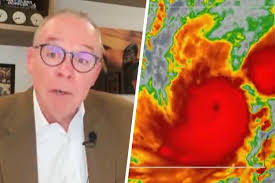
You may have seen the widely replayed clip of South Florida weatherman, John Morales, choking up on air as he described how quickly Hurricane Milton has gained strength. “I apologize,” he finally said. “This is just horrific.”

Maybe it’s only such a reaction (from people who know what they’re looking at far better than the rest of us do) that can truly underscore the seriousness of the situation to those intent on riding it out, as usual.

For many, all the Doppler radar images in the world can’t communicate nearly as well as one momentary sob from a seasoned pro who is not especially prone to emotion, and certainly not on air.

If that’s what breaks through the dangerous self-confidence and bravado of a last few stragglers, I’m all for it.

I’m also enough of a Yankee to know that dry eyes and a steady voice, even when under duress, should not be mistaken for a lack of strong feelings.

Most of the people I grew up with conveyed more through a quiet handshake than any well-intentioned bear-hugger could ever hope to show.

The display could be subtle, but much like the momentary emotion of John Morales the weatherman, what came through was the humanity.

And the humanity could bowl you over.

It could make you feel more seen than you knew what to make of–more seen (or differently) than maybe you were generally inclined to see yourself.

There was such love in it — from those who felt love was something to be demonstrated without ceremony rather than merely spoken. All too often, as they saw it, speech could prove to be a performance without much by way of follow through.

They were forever on the side of follow through and watched anything resembling bravado through narrowed eyes.

Our current moment is a more vocal one, by and large. (I’ll never concede that it is actually more expressive.)

But I know that, however we act out of the depth of feeling that we have for one another, we bring healing and repair. Whenever we show one another that we see each other, particularly in distress, we respond to storms of all kinds with calm and quiet light.

There is such hope in that.

As our neighbors and friends in Florida wait with worry for the storm about to make landfall, may they feel the strength of our love and loyalty, knowing we will be there for them, remembering that God is forever with all his children and hope in him is sure.

See you in church

Sermon: “Angels and Gargoyles” (Hebrews 2)

I’m told that at some point after World War II, one of the Roman Catholic seminaries in the northeast was in the midst of a tremendous expansion. 

Vocations to the priesthood were off the charts; new facilities were urgently needed.  

At this one seminary, in particular, there was a plan for a new large, three-story dorm. 

It came together quickly – so quickly that, in fact, it wasn’t until they were finalizing the blueprints that someone noticed that, somehow, they had neglected to design any bathrooms in the new building. 

Whoever caught the error, one of the priests, had scrawled a question in Latin with large handwriting on the corner of the top blueprint: “Qui hic habitabunt, soli angeli?”

O.k., so maybe your Latin is a little rusty.  

It means: “Who will live here? Only angels?”

Well, I gather that they made a point to revise the plans for the new dorm.   

But the story reminds us that, even for those who squarely believe in angels, there is a clear understanding that an angel’s reality and our reality are different in many fundamental respects.

It’s also true that, if you go into any Christian gift shop, bookstore, or online space, you’ll encounter a lot of angel merch. 

Many people, some very involved in a formal church and others not so much, seem moved and grounded by the idea of angels.  

It’s well beyond anything that any of our denominations are teaching, which, to be perfectly honest, is probably some of the appeal.  

Angels offer a way – a non-technical way – of imagining some version of “up there,” where we hope that it’s better, as opposed to “down here,” where we know (all too well) that it’s complicated. 

In addition, angels stand for the promise that life up there is still intent on lifting the general tone everywhere, and that, sometimes, along those lines, life up there has a message, even a specific message, for one of us.  

The Bible talks about this.  

Angels come to announce many of the great moments of salvation history.  

Their ongoing hold on the imagination of so many is that angels seem to announce far more personal moments and far more granular salvations, whatever their ultimate source.  

Make of it what you will, any existence is so much bigger than what we know. 

You can’t help but be simultaneously inspired and humbled by those moments when that manages to make itself known. 

But, you know, as a pastor I have also known someone who wasn’t into angels, at all.  

Her thing was gargoyles.  

She lived at home with her parents, having had to move back in with them as an adult for medical reasons.  

Her disability disallowed her from working beyond a set number of hours, but even so, there was enough for the occasional new gargoyle for her room.  

Over the years, she found some in antique shops, others online or at a poster store.  

Actually, two of her favorites, to whom she had given particular names, were garden statues that came from McArdle’s Garden Center here in town.

To hear her tell it, she liked to see the beauty in a seemingly ugly creature.  

Yet I suspect that, in her own way, she also knew a thing or two about darkness, and the gargoyles seemed to share some of that knowledge.  

At one point, I was surprised to read somewhere that medieval churches put gargoyles on the outside, not to frighten people, which is what I’d always assumed, but rather to scare away the bad spirits – to make a safe space…a truesanctuary…for the vulnerable. 

The gargoyles were protectors, not tormentors.  

I was excited to share this. 

And when I did, it resonated strongly with her. 

Somehow, in the great mystery of ourselves, her gargoyles seemed to make her feel a little less alone, a little safer in her shelter, a little more comfortable with what life seemed to be requiring at this stage.  

While she waited for an angel’s bright message to arrive, the gargoyles stood beside her in symbolic vigil.  

That may sound strange and gloomy.    

As creatures of the semi-darkness, maybe a gargoyle can’t even imagine the brightness that an angel must know.  

Angels may always be more popular.

But in their own way, I suspect that gargoyles know things, too…they sit waiting in circumstances that an angel cannot know.

They know what it is to fend off all the bad messages in order to make space for a good one. 

I think my friend was right to see the beauty in that, too. 

Similarly, the Letter to the Hebrews understands who Jesus is, not simply in terms of the light he brought into the world, but in his deep understanding of what it is to dwell in the darkness.  

“He himself has suffered, you see, through being put to the test,” as it says in our reading this morning.  “That’s why he is able to help those who are being tested right now.” (2:18)

What makes the Christian story most different than other faith stories is not that it promises a God who is somehow above suffering, hovering demurely but impassively like the angels, bearing a message of light.  

Instead, it finds God’s presence, even in life at its hardest, even in suffering at its deepest, and our faith says that God’s love is such that He shares even this fully with any of His creatures. 

As we await salvations at their grandest or most granular, God is not above anything we go through, and anything we go through points to something worth saving…worth holding onto…precious to a God who knows all too well what the cost of living can sometimes prove to be.   

His example might inspire us to try our hand at being angels where we can.  

Or maybe it will teach us to be gargoyles, doing our part to make those around us feel a little less alone, a little safer in their shelters, a little more comfortable with what life seems to be requiring of them at any given stage until the light may come.  

Amen.