Monthly Archives: August 2024

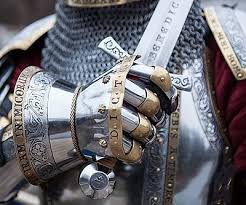
Sermon: “Gearing Up” (Ephesians 6:8-20)

For the youngest among us (not to mention all our teachers), the new school year is either already under way or just about to be. 

On Labor Day, summer solemnly lowers its flag and marches off, never mind that the warm days aren’t quite over and, astronomically speaking, we’re a few weeks short of the equinox. 

Our neighbors and many of us are gearing up for what’s next.  

Our presidential candidates are busy and seem to be appearing at every state fair and professional convention happening anywhere, even as they gear up for the debate, which is coming in a little over a week. 

In our own church family, in addition to our students and teachers, we have people gearing up lots of things – big moves, helping a parent begin medical treatment, a new job.  

Of course, how you gear up for a new season can look very different, depending on how new it is.  

I think I’ve talked about when I was getting ready for ninth grade and my father took me to the Boys’ department at Brooks Brothers to get all my stuff, now that I was going to a school with a dress code. 

Once I actually got to school, of course, I quickly realized that when it came to dress code, the name of the game was actually about flirting with the edge of documentable non-compliance.  The louder and rattier, the better.  

The freshman who only brought one necktie on purpose and wore it every day for the whole year was considered a hero to the whole student body.  

Needless to say, at the end of the next summer, when I was getting ready to go back as a tenth grader, I was on the lookout for very different gear.  

In any case, whether in such a literal sense or a larger one, as summer ends, here many of us are, once again gearing up for a new season.  

And yet, it’s interesting to consider how we do that.  

We spend a tremendous amount of time procuring all the items we’ll need to take or locking down the calendar this next season will follow. 

Those are important things to do.  

But left to our devices, as we enter a new season, I’m not sure we give much thought to the kind of people we will seek to be.

A million years ago, there was that book, The Seven Habits of Highly Effective People.  

It was a good book.  

And yet, it can’t help us much with the reality that effective or not, successful or not, having friends and influencing people or not, life needs to be lived, and the measure of a good one isn’t just a matter of getting and staying organized, or what have you.  

At any moment, who we are is the most fundamental element that we bring into it.  

I think this is what the Apostle Paul is driving at in his famous words to the Ephesians about “putting on the whole armor of God.” 

Clearly, he understands the importance of gearing up for a new season, with all its challenges.  

Being Christian was politically risky then in a way we modern people may struggle to imagine. 

For the first three hundred years of the church’s life, Rome’s distaste for and suspicion of Christians were served by a state apparatus of remarkable efficiency and violence.  

Danger was predictable.  What might bring it down upon anyone could be the smallest thing, said to the right person at the right time…perhaps with the right incentive. 

How can anyone live under such conditions? 

For Paul, this isn’t something you can buy your way out of or plan your way around.

It comes down to who you are.  

He is scathing when it comes to the ways of the world around them all, but his letter takes a playful turn when he invites his audience – the Ephesians first, and now us – to imagine girding themselves for battle.  

I guess he could have said to go get a really big sword and a really mean dog. 

That’s not what he says.  

Instead he says something far gentler and, frankly, much harder.  

“Though you once were in darkness, now as Christians you are light. Prove yourselves at home in the light, for where light is, there is a harvest of goodness, righteousness, and truth.  Learn to judge for yourselves what is pleasing to the Lord; take no part in the barren deeds of darkness, but show them up for what they are.” (6:8-11)

And then he talks about armor. 

“Therefore take up the whole armor of God,” he says, “so that you may be able to withstand on the evil day and, having prevailed against everything, to stand firm. Stand, therefore, and belt your waist with truth and put on the breastplate of righteousness and lace up your sandals in preparation for the gospel of peace. With all of these, take the shield of faith, with which you will be able to quench all the flaming arrows of the evil one. Take the helmet of salvation and the sword of the Spirit, which is the word of God. Pray in the Spirit at all times in every prayer and supplication. To that end, keep alert and always persevere in supplication for all the saints.” (6:13-18)

Our belt of what now? Our breastplate of huh? 

Paul’s point is not that we can slash our way to safety – he’s seen enough to know that never works.  

More importantly, he knows the power of someone truly committed to being a force for good.  

He knows that, for a God-breathed life, there’s just not much they can throw at you, no matter how desperately they may try. 

And so, as the church at Ephesus gears up for a new season, they may not be feeling quite that strong yet, or quite that confident in the people that faith is showing them how to be.  

Nevertheless, Paul tells them, it is time to try.  God needs them to try.  The example of Jesus is clear.  

“Prove yourselves at home in the light,” he says. 

Don’t just check the box of being Christians.  Live out what you believe.  

Whatever you may be facing, bring yourself into that moment, remembering that you are loved by God and that your heart is held by God, and then look for what good you might do, just as Jesus remembered, looked, and did.  

This is what Paul understands as “gearing up.” 

It may not sound like much at all.  

But to those with eyes to see, it is the transformative presence of God in the world.  

Just ask the person who needs a little kindness just then, or a little patience, or a steadfast voice for fairness. 

Just ask the widow, the orphan, or the stranger—or their more modern equivalents, the unloved, the loner, or the person who’s not supposed to be there. 

Just ask because, to them, you being there and you being you are everything.  

So we enter a new season, with all that we have to do, and whatever familiar or unfamiliar roles we are being asked to play. 

Who will we actually be? How are we trying to gear up for that? 

“Take up the whole armor of God,” is what Paul counsels.  

What a world it would be if we Christians decided we would.  

Amen.

Sermon: “Not Ready” (1 Kings 2:10-12, 3:3-14)

One night this past week, I had a bad dream – that particular kind of bad dream that replays an actual memory you have…something that really happened. 

It was from the spring of my sophomore year in high school, in my Algebra II class.  

I think I’ve mentioned before that math was never my thing—well, this happened a week or so after the math department at my high school decided that they agreed with me about that and assigned me a peer tutor.   

We’d been meeting regularly.  Taking it seriously. 

And now, on this particular morning in my math class, we were taking a test.  

I was good.  I was loose.  I’d had breakfast.  The night before, my tutor and I had worked from dinner to check in.  

I was ready. 

None of that was in the dream, though.  I just remember it.  

The dream kicked in without any backstory, but it didn’t need any.  

I knew exactly where I was.  

It was right at the moment when the teacher said, “You may begin,” and we turned over the test, and I looked it over and realized that I knew absolutely nothing.  

That despite my best efforts, my heroic efforts, I was not ready.[1]

Why it was I had this dream – this memory – this week is something I have not yet worked out.  I’ll have to get back to you on that.  

But I relived that awful, sinking feeling…that particular kind of sudden, horrible dread that I haven’t thought about in ages, but that I don’t think I could everforget.  

Has this ever happened to you? 

If it hasn’t, the only thing I can compare it to was the time, more than ten years later, when I was living in a not so great neighborhood, and I was woken up in the middle of the night by this weird squeaking noise.  

I got up to investigate, and it turned out that my front door and, as it happened, the street door downstairs, were both wide open, and just sort of waggling in the breeze, each one softly squeaking back and forth.  

(Max: face)

That’s what it felt like being not-ready for that Algebra test: a swift journey from the land of unpleasant surprise into the territory of existential danger.  

I know I’m exaggerating.  

Or, I should say, now I know that I’m exaggerating.  

In the moment, it is not so easy to know.  

The other thing about that moment is that you feel so alone

II.

Our reading this morning finds King Solomon at a similar moment, although the particular way it’s excerpted does not make that entirely clear.  

He’s given the chance to ask God for anything, and he asks for wisdom, which, coming from a king, is refreshingly humble. 

Even God seems to think so. 

But it helps to know that Solomon wasn’t David’s only son.  

It helps to know that he wasn’t the eldest. 

It helps to know that David lost one son, Absolom, to civil war, and that as David is entering his final days, another son has been lining up supporters and getting ready to make his own move for the throne.  

Some are already calling him king. 

So when David declares Solomon as the one true heir to the throne, the only rightful king, it isn’t just that Solomon suddenly has big shoes to fill, or simply that he’s young (though indeed, he does, and indeed, he is).  

He isn’t cut out to be a general—he knows it. 

But how can you be a king without being a general, or at least a warrior?  

He doesn’t know how to be a king in those terms or any other. 

All he knows is that he is not ready. 

He’s not ready for what the moment requires, much less whatever the future may hold.

Although he has friends and supporters, in a deeper sense he has nobody—nobody to guide him into being the man he will need to be. He is all by himself.  Except for God. 

And it’s here that Solomon does a remarkable thing. 

He prays for wisdom.  

Not for power.  Not for money. Not for more friends. Not for a copy of “Warfare for Dummies.”  

He prays for wisdom, which is the capacity to see things as God sees them, to the extent that any human can. 

It was particularly wise to do that, of course, which may be the Bible’s way of signaling that much of what he needed was actually in him all along. 

But whether it was there before or just sort of washes over him now, it changes him definitively from then on. 

Wisdom offers a sense of what actually matters and what really doesn’t…an eye for what is permanent and what is temporary.

And that awareness shapes him into a very different kind of king—one who will turn out to be just the man they need for an hour that nobody could have anticipated.  

III.

The Bible has great faith in wisdom.  

It argues that any of us can learn to see something as God sees. 

Even in the moments when our lives seem to shift between unpleasant surprise and existential danger, we are never alone.  

When I was a student, I didn’t have a sense for the way in which doors open and close in our lives—that sometimes, God says yes; other times, God says no; and also – and this is the crucial part – that with God, there are a lot more possible answers in between.  

So much of the weight and loneliness of not being ready is that feeling of being smushed by what seems like God’s immediate and irrevocable “no.” 

Wisdom reminds us of how relatively rare that “no” really is. 

God takes way too much delight in the “not yet,” and in the “well, not this way” for any verdict of “no” to have much force. 

God is forever attuned to even greater life and possibility still to come than we can imagine, and if we can give God a little time and room to work, what follows is almost always a blessing in some way. 

Wisdom reflects God’s own patience when it comes to deciding what events really mean, remembering well that the moment itself often cannot tell us.  

But it also means that if God does the divine part, we have to do ours.  

It’s no good to let the blessings fan out before us, like a hallway of doors unopened, while we sit there “waiting for God to do something.”

Wisdom also means seeing clearly just how much God is doing.   

Solomon could have sat tight—or consoled himself in comfort—until God got around to saving the kingdom and finding a way to bail out its king.  

He doesn’t.  

Solomon asks for the capacity for good judgment so he can take part in his own life and become someone that others can depend on.

Let’s not forget that.  

We know that our lives hold many moments for which we may not be ready, and that these can be far more serious and lingering than a failed algebra test.  

God’s promise to us is the same one made to Solomon. 

“I now do according to your word,” God says to him.  

May we learn to promise God the very same.  

Amen.


[1] The germ of this sermon comes from a key moment in a much better one, “Skills and Gills,” by Rev. Dr. Tim Boggess, delivered August 16, 2015 for Day1 Radio.  https://day1.org/weekly-broadcast/5d9b820ef71918cdf2003ca9/skills_and_gills