Monthly Archives: September 2023

Sermon: God Will Not Be Pro-Rated (Matthew 20:1-20)

Everybody loves it when Jesus talks about love, and they hate it when he talks about work.  

And to be clear: by everyone, I mean me.  

I mean, really.  

There’s that line where Jesus says about how every hair on our heads has been counted.  I love that one. 

In the Gospels, there are all those people Jesus meets whom he looks upon and loves, from the disciples with their nets by the seashore, to the woman he rescues from getting stoned to death by her neighbors, to Zacchaeus the tax collector who starts out by watching forlornly from a tree as Jesus passes by…and he looks at them and loves them and their lives are transformed

I love those guys. 

“Love thy neighbor as thyself.” 

That’s a harder one, but it’s still really good.  (MG: look up.) I’m trying.

But when it gets into vineyards and servants and masters, these stories that come toward the end of the Gospel of Matthew…there’s a lot of me that wants to push back.  

Because it’s one thing to set stories of forgiveness and mercy and love among members of a family, or between old friends who have a falling out. 

It’s another when he’s talking about money or about effort or about credit going where it’s due.  

When you get into that territory, the word we’re perhaps most looking to hear is a word that lifts up fairness rather than generosity.  

When it comes to work, at least, we’d like to believe that the advice Jesus has for a Johnny-come-lately is that next time, Johnny-ought-to-come-earlier. 

Work is like that for a lot of us.  

II.

I want to name that this morning, not because Jesus is trying to preach about work in today’s Scripture, but because our own relationship with work, and the challenge we have in collaborating with others, can make the Gospel message particularly hard for us to hear.  

You heard the set up.  

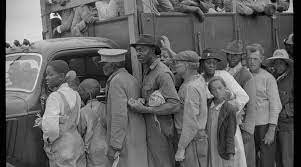
A wealthy man gets up before first light and goes into town, looking to hire day laborers to work in his vineyard.  

The story will later indicate that the day turns out to be not just hot, but scorching – a word that appears only two more times in the entire New Testament.  

But this first set of laborers are the guys who would have filled up their canteens the night before—the ones who splurge on the really good sunscreen—the ones who went to bed early. 

They have their agreed upon spot on the wall for when the owners or the foremen pull up in their trucks and count off how many guys they’ll need that day.  

That’s what happens, and off they go.  

But then a few hours later, the truck swings back through town.  

Now sitting on the wall are the guys who woke up late, missed their bus, couldn’t find their keys.  

It’s more first-come-first-served along the wall now, although maybe some of them know each other…

”Hey, nice to see I’m not the only one who’s late today.”  

“Yeah, man.  Baby had us up half the night.” 

The truck pulls up, they all hop in, and off they go.  

But then a little later, the truck pulls back up again along that wall.  

Now it’s all the guys who had to take a kid to the doctor first thing, who left their canteens and their lunch at home, and who need to stop at CVS on the way home to pick up a prescription and get right back with it.  

They’re sitting there in no particular order, more focused on whether they’ll get enough money to pay for the medicine.  

And so it goes on, with the truck showing up at that wall every few hours, and vineyard owner telling whoever it is who’s managed to find their way there to go ahead, hop on in, and head out with him to the vineyard. 

Finally, just as happy hour is about to start, some of the guys who never really stopped the night before sort of wander out. 

They manage to plop themselves down on the wall, hoping they look a little better than the other guys do, and the truck pulls up again.

Off they go, trying to keep from getting truck-sick, arriving at the vineyard just in time to load a sack or two from the day’s picking before the owner honks his horn to call everyone back in.  

But now comes the hard part.  

Because the foreman of the vineyard hops out from the passenger side of the truck, with his little metal box full of twenties, and he tells everyone to line up, starting with the guys who just got there, past the worried dads, and so on, all the way back to the guys who had been there since dawn, taking the last swig or two from their carefully rationed canteens. 

They’re at the back, so they have a good view of that line ahead of them, and they see each of the charity cases, the basket cases, and the flat-out hard cases getting a twenty and a handshake for doing what looked like next to nothing. 

They’re thinking of the cold morning before dawn…and the scorching heat in the fields…and their faithful effort…and they’re sure that they’re about get the biggest bonus of their lives.  

But when their turns come, the foreman gives them each a twenty and a handshake, just like he had with all the others.  

And it hurts.  

It hurts because, somehow, it seems to mock their faithfulness.  

III.

Have you ever felt that way?  

Has it ever felt like life—or fate—or maybe even God—was mocking your faithfulness?  That being dependable turned out to be something for schnooks? 

I used to think that nothing in the world proved the doctrine of the total depravity, or illustrated the sin-sick soul quite like trying to do a group project in middle school.  

Or you may remember the wonderful play Amadeus by Peter Shaffer, which was also a movie, imagining the career and death of Wolfgang Amadeus Mozart.  

The villain, a rival court composer named Antonio Salieri, has given everything to music, which he pursues as a form of religious vocation, only to have himself upstaged by the seemingly effortless talent and mocked by the seemingly bottomless self-indulgence of Mozart.  

Salieri’s envy, and his sense that his faithfulness itself has become a joke, make him more or less murderous. 

The point, as I take it, is not that Salieri is, in fact, unusually evil, but rather that the darkness of his feelings is altogether human, which is to say, common enough. 

I think we see another instance of it in this morning’s parable.  

And the challenge that the parable names is a big one. 

Because it is all too easy…all too typical, at least of our world…to see one another in terms of who deserves what

Others deserve less…or maybe what I mean is that I deserve more

In any case, what we want, more or less, is for God to come to us pro-rated.  

What Jesus is here to tell us this morning is that love doesn’t work that way.  

It doesn’t work that way in the Father’s love for us, and it doesn’t work that way in the love Jesus invites us to offer to and grow into with one another.  

Because whatever they were harvesting in that field, it must not have been love or gratitude or empathy—nothing that serves to nourish a soul. 

If that’s what had been planted in that field, then the ones who’d gotten there first would have gotten the most…and found themselves fortified to offer the most.  

But that’s not what happened.  

Instead, their attitude seems to be first come, first served, and let’s pro-rate all of it down from there.  

IV.

Except that’s not how it works.  

What matters to Jesus isn’t when you get to the center of town and sit yourself on that wall.  

It doesn’t matter if you’re up early, bright eyed and bushy tailed, or if you drag yourself there after sleeping all day in your clothes.  

The point is that if you get yourself to the wall, he will show up in that truck.  

He will find a place for you to join in the work of the vineyard.  

And if we don’t understand the harvest to be lives of love, gratitude, and empathy, not only for those we love but for all those God loves, then…well…maybe we’ve been lining up on the wrong wall

If that’s true, then we’d just better hope that there’s still time, that we can still hurry, and that the truck is still going to swing around one more time.  

V.

There are moments in life that test us, even despite our very best intentions.  

There are situations that can seem to mock our dedication to the people and the duties that God has placed before us, or when what we do remains unseen and unsung. 

There are days when it’s just hard, and we get crabby and grabby.  

We know, Lord…we know.  

It’s not always easy to get ourselves out to the vineyard to do what you need us to do.  

The message for me today isn’t about the fairness or unfairness of the wages, although it’s easy for me to get stuck on that. 

The message is about the faithfulness of the truck. 

And may we always rejoice when we’re out in the vineyard and we see it pull up, dropping off somebody else to join the work, recognizing grace whenever it arrives.

Amen.

Sermon: “Only-Children of God” (Romans 14:1-12)

In the fall of 1984, I went off for my freshman year at boarding school, which was one of the best—and hardest—things I’ve ever done.  

         My mom still isn’t over it, although she forgave me somewhat four years later, when I went to college about 150 miles closer to home and could call my grandmother to tell her that she’d be getting a thunderstorm in about a half an hour so she needed to go out and close her car windows. 

         She’s long said that if she had to do it over again, she would never let me go away so soon. 

         For me, though, boarding school was pretty great, overall.  

         The classes were hard, and there was a lot of work. The weather was lousy.  The food was even lousier.

         But even with all that, the hardest part for me by far was the dorm. 

         You see, I’m an only child, and so there are some basic things I’m not very good at: things like, say, choosing your battles, keeping your mouth shut, covering for each other against grownups…and, well, sharing in general – these were all things I had never had much practice with. 

         Especially the sharing.  

         Not that I was against sharing, or I hope, particularly selfish by nature.  

It’s that I just had no feel for when sharing was expected, or how it worked…and so I was a little bit of a social blunderer as I began my time in this strange, new world which, from what I could tell, was mostly run by kids. 

I should probably also admit here that, like many only children, I didn’t really think of myself as a kid—I mean, I had as much grown up conversation as I liked every single night from the start of forever. 

I could hold my own at a lot of dinner tables. 

I could talk about the politics of the offices where my parents worked like I was a guest on “Wall Street Week in Review” with Louis Rukeyser on Channel 13, which of course, like all people over the age of 7, I watched every Friday night. 

Unfortunately, when it came to questions like who was “hotter,” Joan Jett or Pat Benetar, I didn’t have as much to say.

 Unfortunately, as it happened, that’s what a lot of kids were talking about in the fall of 1984. 

And unfortunately, as I said, it seemed like they were the ones who were more or less running this new community in which I found myself. 

So there was a lot to get used to. 

In a funny way, a lot of my growing into mature adulthood required me to come to see myself as a kid. 

I had to learn that I was one small part of a much larger whole, and not just the opposite, which is what I was to my parents, for whom I was the sun, the moon, and the stars. 

I won’t detail the battles.  To tell you the truth, most of them were more like skirmishes, anyway. 

But one of the things that was hardest for me to get a feel for was deciding between the things that mattered and the things that didn’t (the phrase is Michael Gorman’s).  

In living together, what was it that actually mattered to me? And why was that again? 

And then on top of that, there was the even harder question for an only child to answer: what is it that matters to these other people with whom I am now sharing my life?  What are their wants and needs…and where am I in all of that

Slowly and painfully, I came to understand that life together involves asking those questions over and over and over—that asking them is part of life’s very rhythm.  

II.

Now, I’m not saying that the churches of ancient Rome were full of only children.  

But I will say there’s something that feels a little familiar to me about the challenge Paul seems to be addressing in our Scripture this morning.  

Because these nascent communities were apparently at loggerheads, particularly as they tried to work out the things that mattered from the things that didn’t.  

Two thousand years later, the debates Paul mentions seem ridiculous now.  

In fact, this is so true that it can be hard to make heads or tails of the passage we’ve read this morning, especially if you’re hearing it for the first time.  

I mean, it starts out pleasantly enough. 

“Welcome those who are weak in faith,” he says, “but not for the purpose of quarreling over opinions.”  

OK.  

But then he goes on to talk about how some people coming to church will eat only vegetables, while others don’t.  

(MG: shrug.)

Next he goes into this thing about how some people think one day is better than another (hint: he’s talking about the Sabbath).  However, it turns out that other people don’t see much of a difference between one day of the week and another.  

(MG: shrug.)

I mean, thank God we in the churches don’t ever get caught up, anymore, in small things that shouldn’t be divisive but are, right? 

Don’t worry, I’m not about to spill any tea. 

Or correction: don’t worry, I’m not about to spill any of our tea, 2CC.

Because last week, as I was getting ready for this morning, I decided to ask people in other churches about this.   

About if they knew anything about things that shouldn’t be divisive but are, and about where the churches are with that here in the Year of Our Lord Two Thousand and Twenty-Three. 

Here is some of what they said: 

“Our church took 18 months to decide on a new carpet for the Sanctuary,” wrote one of my dear friends.  “By which I mean, they were deciding between ruby, Merlot, or Tasteful Maroon.” 

Another friend reported that because of a fight over space in the church refrigerator, the Hospitality Committee and the Fellowship Committee were refusing to meet.  

Another talked about the time they decided to use gluten-free communion wafers, which is something a lot churches are doing.  

Unfortunately, somehow someone at this particular church ordered gluten-free Communion wafers that were taco-flavored.  

From the faces you’re making, I see you have apparently had one of these somewhere.

 In any case, that happened, but then there was a fight about whether the church could go ahead and just throw the rest of the wafers away, or if the proper Christian thing to do was still to use them up until they were gone. 

At another place, there was such division around which shade of beige to paint a room that they had to have a full congregational vote in order to decide. 

I could go on. (I’ve got a lot more.)

But I think you will see the point that all these years after Paul’s letter to the churches of Rome, our churches still struggle at times to decide what matters and what doesn’t. 

Today, as it was back then, learning to ask such questions is just part of life’s proper rhythm.  

         What Paul asks us to remember in the asking is quite simple.  

         “We do not live to ourselves,” he says, “and we do not die to ourselves” (v. 7). 

         What’s changed irrevocably for us is that we now understand ourselves as part of a larger whole…part of a greater family…part of God’s universal call to build a world in which all are truly welcome.  

III.

         Of course, that always sounds really really nice.  

         The fact is that it pushes us.

         As the wonderful theologian Willie James Jennings admits, “The single greatest challenge for disciples of Jesus is to imagine and then enact actual life together.” (Belief Commentary on Acts)

         That sounds right to me, naming how much of a challenge it is for us “to imagine and then enact an actual life together.”

         For so long, church was an hour a week that we gave in the name of social respectability and of making sure we had a reservation in the event something awful happened. 

         But its deeper call has always been to something much more transformational than that. 

         It is a call to let our hearts grow. 

         As Jennings says, “Only in life shared, joined, and exchanged in desire of being made permanent, can differences emerge in their deepest beauty—as invitations to the expansion of life and love.”

         In a world which finds solace in its silos, church is a call to find joy and beauty and purpose in life undeterred – and in fact, enriched – across our differences. 

         Which is a very different way to live, but is the way that Jesus makes it possible for us to live.  

         That’s not to say that Jesus makes it easy.  

         To some extent, we are all recovering silo-holics.  

         We are all getting over the temptation to live as “only children of God,” rather than as part of a great family of faith.   

         But I think we all know what it is to long for a more open, more generous, more loving, more accepting way of life.  

         We know what it looks like when someone knows they don’t have to face the hard times alone, or grapple alone with the hard facts about themselves.  

         We know how much we need to know that we’re loved, and how eager we are to be loving in return. 

         This is what Paul wanted for the churches of Rome, and it’s what he wants for all of us today. 

IV.

How do we decide between the things that truly matter and the things that don’t, whether for ourselves or for our life together? 

When can we see some new challenge as an invitation to expand our capacities for life and love? 

Because that is God’s invitation. 

And it’s in those spaces that the Spirit is pleased to dwell.  

May we ever seek to be among them.  

Amen.  

Sermon: “Untangled” (Romans 13: 8-14)

Have you ever taken a red-eye flight somewhere? 

I love a red-eye.  

I don’t get much sleep, and the legroom and the elbow-room of Business Class is always more than I can afford, but I still love it. 

The old movies always make it seem like travel used to be a lot more romantic than it is now.  

When Hercule Poirot was getting on the Orient Express, he was eager to sample what the dining car had to offer.  

That’s not what it’s like, anymore, is it?   

But there’s still romance to the red-eye.  

You gather around the gate sometime after dinner, and once you’re on the plane, there’s the settling in—some people are picking their movies or getting their iPads fired up; you have students getting out their reading for some class; parents traveling with kids putting Uno into the seat back pocket in front of them, right next to the barf bag; executives already unpacked and glued to their laptops before those of us in Zone 4 have gotten that lecture about sharing the overhead bin space.  

At some point after a couple of hours in the air, they turn out the cabin lights for sleeping, and it’s then that you can spot the other night owls, reading light by reading light, all the way up to the very front, as the world of the airplane goes quiet and there’s not much movement along the aisle.   

Of course, at some point, it all starts to feel long.   You’ve had enough of your book.  The person whose movie you were secretly sort of watching has switched to a t.v. show you don’t care about. You look at the little GPS thing and you’re only just approaching Greenland. Your tailbone hurts. There are a lot of miles yet to fly. 

But then the best thing happens.  

Dawn arrives.  

The sky goes from black to blue, and there’s a thin orange line that curves ever so slightly as it hugs the outline of the dark earth below.  

You can hear them in the aft kitchen, getting the coffee cart ready, and people begin to wake up, and it feels like, well, it won’t be long now.  

We’ve almost made it.  Almost there. 

I love the romance of a red-eye flight.  Don’t you? 

II.

The Apostle Paul might have, too, if he’d gotten the chance.  

He was certainly adventurous – though certainly also, he was more of a dutiful business traveler, a professional fixer, of sorts, who would have been hunched over his laptop, working late into the night, being sent by the home office into some new fiasco he had to untangle, rather than someone who was chasing diversion for its own sake.  

But certainly, he understood the power of the dawn. 

He says in his letter to the Romans this morning, “…You know what time it is, how it is now the moment…” which the King James Version translates as “high time,” so: “You know…how it is now high time for you to wake from sleep.  For salvation is nearer to us now than when we first became believers…” 

“The night is far gone, they day is near.  Let us then lay aside the works of darkness and put on the armor of light.” (13:11-12)

For Paul, this journey that had started to feel so very long seems to be finding a different energy. 

That thin orange line tracing the earth has told him that it won’t be long now.   We’ve almost made it.  We’re almost there. 

III.

As it happens, that’s also not unique to Paul. 

All throughout Scripture, there are stories that set apart the dawn as a particular moment when God is at work in the world. 

If you were here earlier this summer, that story of Jesus walking on the water we heard occurs just before dawn.  

When Jesus dies, the women go to the tomb just before dawn, only to discover it open, and the body gone.  

In the Old Testament, it is just before dawn that Moses parts the sea and the Hebrew people escape from bondage into freedom. 

The new day is constantly affirmed as a time for renewed possibilities—as God shows across the generations that the works of darkness…all the works of fear and greed and the fruit of all our worst inclinations…will not stop God.

Because even in the midst of darkness, for those with eyes to see, God is constantly bringing new life and new hope into the world. 

Things are getting untangled.  Liberation is near.  Rescue is near.  

IV.

It may seem like a bit of an odd message for Homecoming Weekend, when so much of the point is to invite you back into the tangled routines of three-season life, and most especially to the rhythm of church-going.

I mean, let’s be honest: for a lot of us, liberation may not seem quite so near now as seemed was a week or two ago.  

I remember walking our daughter Grace to her first day of Kindergarten some years back. 

I was watching her happily skipping along, ready for this new adventure.  

Meanwhile, I was a puddle – like, unable to see because of the tears (and thank heavens I wasn’t driving) – because there I am with this wonderful little kid holding my hand, and now for the rest of her life, starting that day, she was going to be working for The Man

Isn’t that the reality of this season? 

Isn’t so that, while some of us may be the joyful Kindergartener, eagerly starting a new adventure, plenty of us are not that, and are getting back to commutes and commitments we didn’t necessarily miss all that much while we were away. 

And actually, that brings us back to Paul.  

The first audience for his letter in Rome probably wasn’t a group who had much experience by way of vacation.  

Leisure time really hadn’t been invented for anyone but Emperors.  

But that first audience knew what it was to be tangled. 

They shared one of the great challenges we often have as a people of faith, which is to be sitting in the middle of demanding, back-breaking, sometimes even heartbreaking days, yet also trying to live for the greater good, trying to remember to be patient and forgiving, generous and kind, and everything else that comes with being the people that Jesus invites us to be. 

That didn’t fit easily into the world of the Christians of Rome, any more than it seems to fit into ours.  

V.

But as Mahatma Gandhi once counseled, “We must be the change we want to see.” 

And Paul’s message this morning is along those lines: he names the mysterious paradox that, in hoping, we bring hope into the world. 

Because, of course, what dawns in us is ultimately what dawns in the world.  

It’s the armor of light that finally cuts through any tangle if we’re willing to follow the ruthless logic of love and care and of living for something greater than ourselves. 

Now, I will date myself and remind a handful of us about a sitcom from the early 80’s, called “The Greatest American Hero.” 

It wasn’t my favorite, to be honest.  If you don’t know it, that’s probably just as well. 

Just about the only thing memorable about it was the theme song.  

But its premise is instructive, in its way. 

A regular Joe sort of guy randomly encounters aliens one day, and they give him a special suit – a superhero sort of costume – that is full of capabilities beyond the bounds human science.  The ability to fly, for example. 

Unfortunately, they give him the suit, but at the moment when they are about to hand over the instructions for the suit, they are interrupted, and the aliens fly off, leaving the guy standing there with the suit…and whatever it might do. 

The point of the sitcom is, of course, how does he learn to use the suit?  How will he awkwardly learn to discover, much less master, what it can do? 

How does he come to terms with its powers, which are, by extension, his powers? 

In some sense, the armor of light can be like that.  

How will we come to terms with its powers, which are, by extension, our powers?

How can we move, with so few instructions, in the direction of the dawn, as it breaks as a thin orange line hugging the dark surface of the earth? 

Most of all, we move by moving.  

We move by untangling ourselves—by investing less energy, by awarding less time, by directing fewer resources, fewer excuses, and fewer of our aspirations to those necessary evils that cannot possibly bring out our best.  

Actually, maybe that’s just it:  maybe the most important lessons faith has to teach us are just how few of the evils we face are actually “necessary,” for us or for anyone else. 

Maybe what’s necessary for us is to become more serious in loving.  More serious in caring.  More serious in listening.  More serious in letting ourselves be claimed by our neighbors, and so, more serious in helping. 

Paul’s hope is that, with the help of God, and following the example of Jesus, we will be bold enough to live as those who have been rescued, and bold enough to stand up for our deepest selves – our best selves. 

And in that, to bring those best selves into the world.  

That’s what he means by “putting on the armor of light.” 

VI.

I love the romance of a red-eye flight.  Don’t you? 

Don’t you love the settling in, the slow quiet, the companionship of the vigilant, and then, wonderfully, the arrival of the dawn? 

Dawn tells us that we are almost there. 

And as we settle in to a new church year together, and dawn seems so far away, may we learn to live as those who are ready, even now. 

With God’s help, may we put on the armor light, and go forth untangled.

Amen.

Sermon: Looking Up (Romans 12:9-21)

When I was first moving to Philly and was trying to find my first city apartment, my dad went with me.  

Ostensibly, it was to write the deposit check for the first month’s/last month’s rent.  

The fact is, he didn’t trust me.  

He didn’t trust me not to end up getting schnookered.  

And fair enough. 

He knew that there was a high chance that I’d take a shine to some nice old character in some little office filled with papers all over every surface, or maybe a dog. 

In ten minutes, I’d know their whole life story, maybe their birthday, all that…which didn’t mean they weren’t still willing to schnooker me just the same. 

He’s a smart guy, my dad.  

So we went around looking at apartments in Philly for a day. 

They all looked fine, and after a few hours, we decided on one. 

The real estate agent took us back to his office.  It was, indeed, filled with papers all over every surface.  It was August and the guy turned on an old fan for us and put on a little sweater for himself.  I loved him immediately.  Mr. Katz, his name was.  

But we weren’t done.  

Because suddenly Mr. Katz was sitting across from an officer of the Chase Manhattan Bank.  

They were hammering out the terms of my lease like they were negotiating building a gas pipeline across Turkey.  

I think they were both enjoying it, actually.  I was horrified.  

Finally, it was over.  

Mr. Katz got out the keys to my new apartment and spun the lease around on his desk for me to sign.  

“Oh, just one more thing,” said my father.  “I’d like to add one more term. He dictated, “The lessee shall have the ‘right to quiet enjoyment’ of the property.”  

Mr. Katz looked annoyed.  I looked annoyed.  

Unfortunately, I intervened. 

“Dad, I really don’t think that matters,” I said. 

“You should listen to the kid,” said Mr. Katz. 

My dad shrugged, we signed the lease, I got my keys, and off we went. 

Well, the kid should have listened to his dad.

The kid should have listened to his dad because the guy upstairs turned out to be a drummer who liked to practice before work.  

The guy downstairs turned out to be having a tough go of it, and sometimes you’d find him sleeping in the basement by the washing machine because there was something in his apartment that frightened him, and sometimes he just wasn’t up for it.  

It was one thing like that after another.  

There was a payphone on the corner and I saw someone from another building run out in his pajamas and bare feet with a hacksaw because it kept ringing in the middle of the night and was done with it. DONE.  

It was impossible not to enjoy Philly – I loved the city.  

But there was nothing quiet about that apartment.   

II.

I’m telling you this because many of the early churches, including the communities founded or visited by the Apostle Paul, would have been “house churches.”

That is, they were churches that might meet in someone’s apartment in an ancient building where a moderately successful artisan with a family and a workshop—maybe even a couple of slaves—might live cheek by jowl with newly arrived immigrants trying to gain a foothold in the community, or above a small tavern with a backroom where a barmaid might sleep, and not necessarily alone, or right by an apartment for a widow with a son in the army, etc.  

There wouldn’t have been much by way of “quiet enjoyment” in such a place.  

Every triumph, every tragedy, every family squabble, every creep in the stairwell, every chattering toddler, everybody’s breakfast, lunch, and dinner would have been common knowledge. 

It was a hard and not very private life, even as some might really be getting ahead and others might be barely hanging on right there on the same stairwell.  

No wonder, then, that it got their attention when Paul arrived in town and began to describe a different way of living. 

No wonder that they listened when he said that it didn’t have to be this way—or, not to put too fine a point on it, that it wasn’t supposed to be this way. 

The life he talked about wasn’t necessarily quieter, of course, but it was certainly more gentle.  

He helped them picture lives with less servile bowing and scraping, and room to love more authentically.  

In Ancient Rome, “honor” was a kind of social currency that the low offered the high in exchange for patronage, to which Paul says, “what if everyone gave it to everyone?”  

“What if we tried to one-up each other in kindness or in helping out?” he asks. 

“What if we learned to live, not in a mutually respectful silence, but in harmony—in tune—with each other?” 

Doesn’t that seem like how it’s supposed to be?  

Paul thought so.  

No wonder they listened.  

No wonder that vision called to them, and when they found someone who shared it, they felt they’d encountered a brother from another mother…a sister from another mister.  

Right?  

Into a world which taught people to keep their heads down, Paul was teaching them to lift up their eyes and look for a whole new world that God’s Word in Jesus was bringing into existence. 

Imagine that Word slowly climbing up that ancient stairwell, with each resident…each life…learning to live so differently than any of them had been taught they might live.  

Imagine them coming together in the artisan’s workshop – the biggest, nicest apartment in their building – and the barmaid is cleaned up and sitting there next to the widow, and the slaves are actually sitting, themselves, and the widow’s son is home visiting from the army, not at all sure what to make of it, but chatting pleasantly enough with the artisan and the immigrants.  And everyone’s passing around the baby.  

There wouldn’t have been anything quiet about their enjoyment, of course, but what a world.  

Their needs and their realities are so different from our own, but I think we can still feel how extraordinary and beautiful it must have been… 

…How nearly unthinkable until you saw it.  Were part of it.  

We know a little bit about how, sometimes, it isn’t until we receive answer that we realize that we’d had questions.  

We know how, sometimes, it isn’t until we feel loved that we fully realize just how lonely and longing we’ve been.

We know about how life still trains us to keep our heads down.  

But the head-down life isn’t what God wants for us, any more than it’s what God wanted for those early Christians living in Rome.  

III.

What keeps us from saying yes? 

If this life is as extraordinary and beautiful now as it was then, why don’t we seem to reach for it? 

It turns out Paul has some thoughts on this, too. 

You may have caught that his tone seems to shift in this morning’s reading.  

What begins as this evocative description of what a faithful life looks like and about how blessedly immersed and enmeshed we might become in one another seems to lurch a little not far from the end.  

He begins to speak a little more ominously about vengeance. 

“Do not repay anyone evil for evil,” he says, “but take thought for what is noble in the sight of all.” 

That’s not so bad.  But he’s not done.  

“Beloved,” he says. “never avenge yourselves, but leave room for the wrath of God; for it is written, ‘Vengeance is mine.  I will repay,’ says the Lord.” 

Still not done. 

“If your enemies are hungry, feed them; if they are thirsty, give them something to drink; for by doing this, you will heap burning coals on their heads.”  

Ok, still not quite done, but you get the idea.  

It’s like someone changed the channel: now we’re watching “The Godfather.” 

So why get into that…and what could it possibly have to do with us? 

I think it starts back in that Roman house-church we were talking about.  

Because heaven knows, faith is not easy to live into.  

In recovery, they talk about sobriety as a journey, not a destination.  It’s a walk to be walked one day at a time.  

I think faith is like that, too.  

And so I imagine these neighbors on that ancient stairwell, now learning to see one another and sisters and brothers, and I wonder: what did the widow on the third floor make of it when she saw the barmaid crying again, sometime after welcoming another stranger behind the curtain to her bedroom? 

What did the artisan make of it when now there were all these new folks who needed his generosity and could never hope to repay it? 

What did the immigrants make of it when the slaves had more to eat and nicer clothes than they did?  

They must have had moments when they wondered why so much hadn’t changed even though, of course, so much had.  

As much as anyone shares with anyone else, there are those moments we keep private, when that sense of “why you and not me?” or “why me…and not you?” takes hold of us.  

We can be tempted, perhaps not to full-blown, Godfather-style “vengeance,” but to something more subtle and much harder to notice in ourselves. 

There is still a part of us that is immersed in the ugliness and unfairness and violence of the world that Jesus promises us is already passing away. 

That world can still convince us now and again that we’re looking down at the ground and not up at the heavens because we want to, because the ground is where there’s something to see.  

It has a lot to say about keeping and settling whatever scores we have in whatever ways we might. 

And so, as extraordinary and beautiful as our lives might be, we look away.  

Paul is affirming for us that our faith is a journey we walk day by day, reminding ourselves to look up and to take in the view.  

Our God is the God who wants nothing less than for all people to see that view for themselves.  

IV.

Ever since my first apartment in Philly, there have been plenty of times when I’ve wished I could whip out a piece of paper and assert my right to quiet enjoyment, not just of some apartment, but of jobs, of relationships, of Supreme Court decisions, of my own conscience – you name it.  

But that’s not the life that Gospel invites us to live.  

It invites us to live gently rather than quietly. Powerfully rather than helplessly.

Each day, we receive that invitation once again.  

Each day, we feel some of the impulse to keep our eyes on the ground, just the same.  

But God calls us to look up and to find our way in a new world – a new world where, finally, all of us know what it is to belong.   

Amen.